
Last updated October 30, 2026
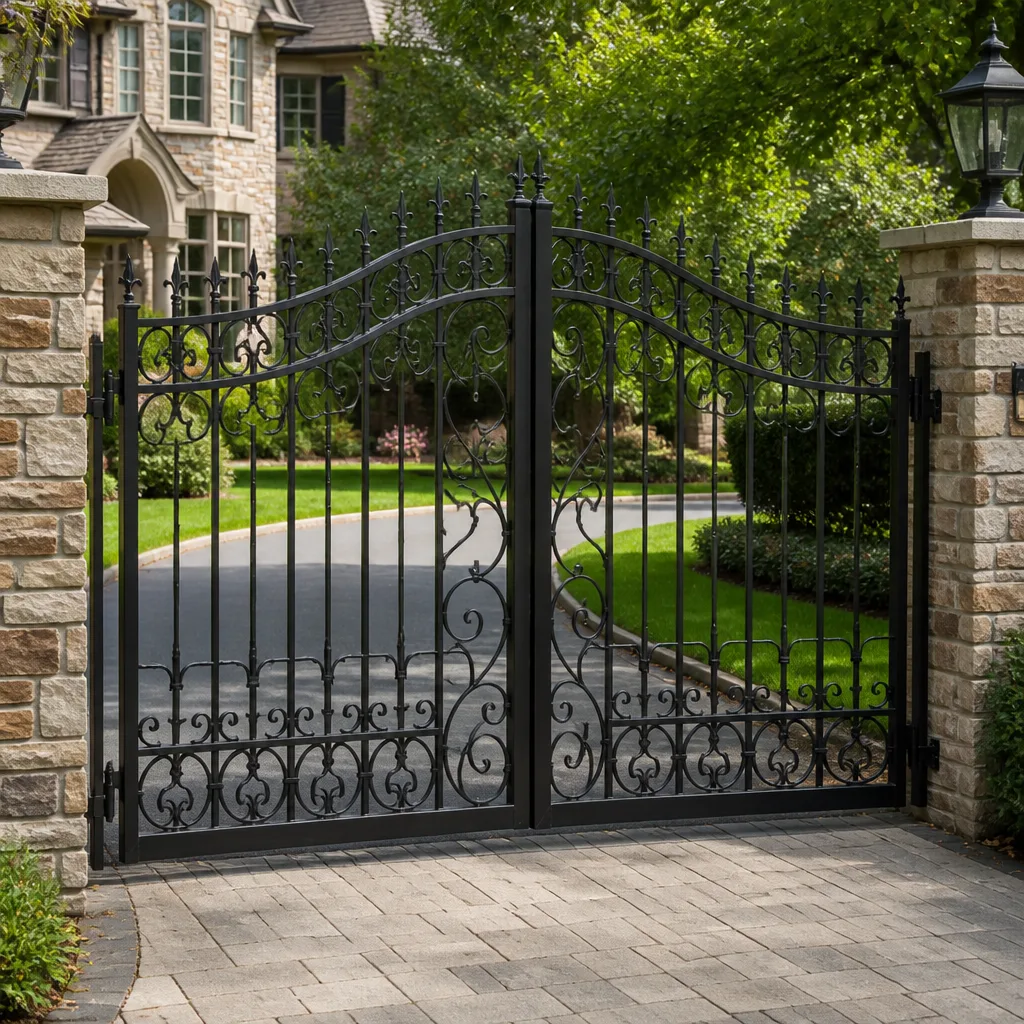 Wrought iron
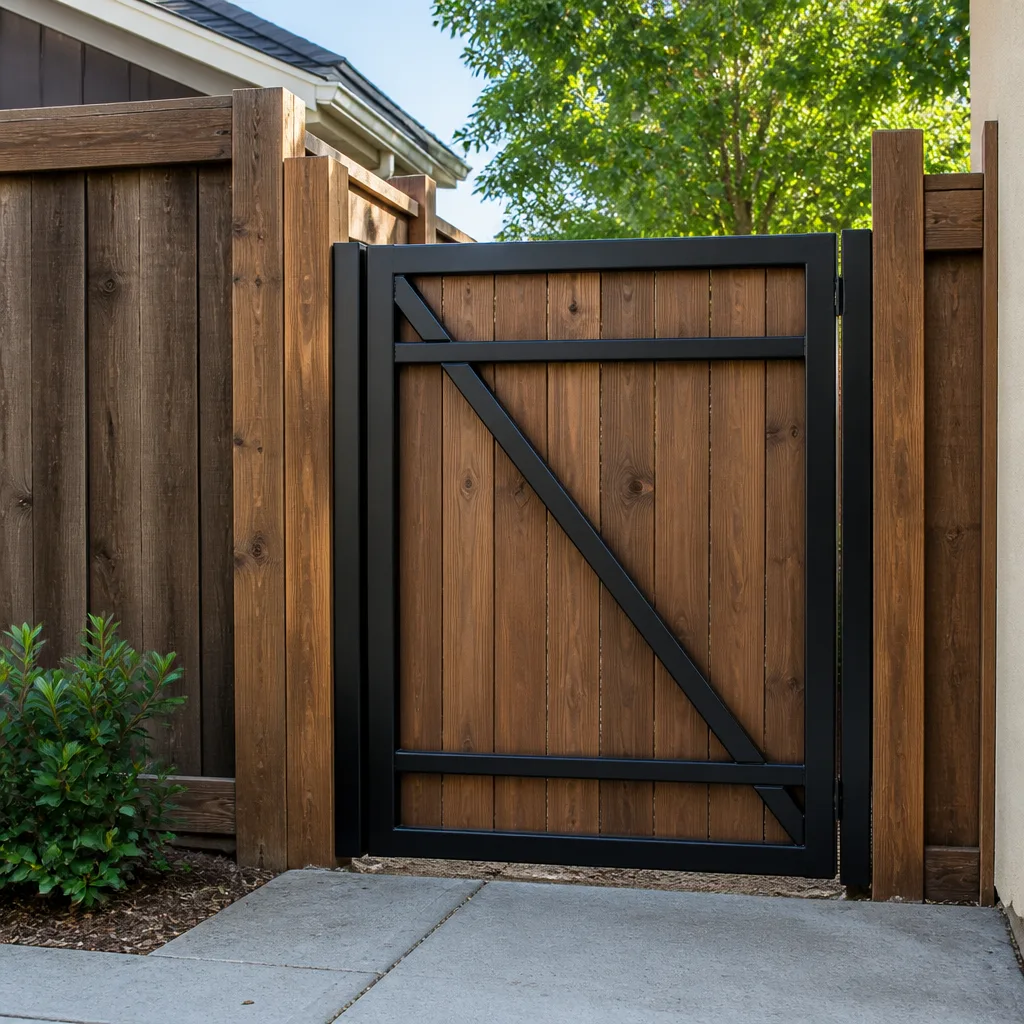 Wood & steel frame
 Farm & ranch
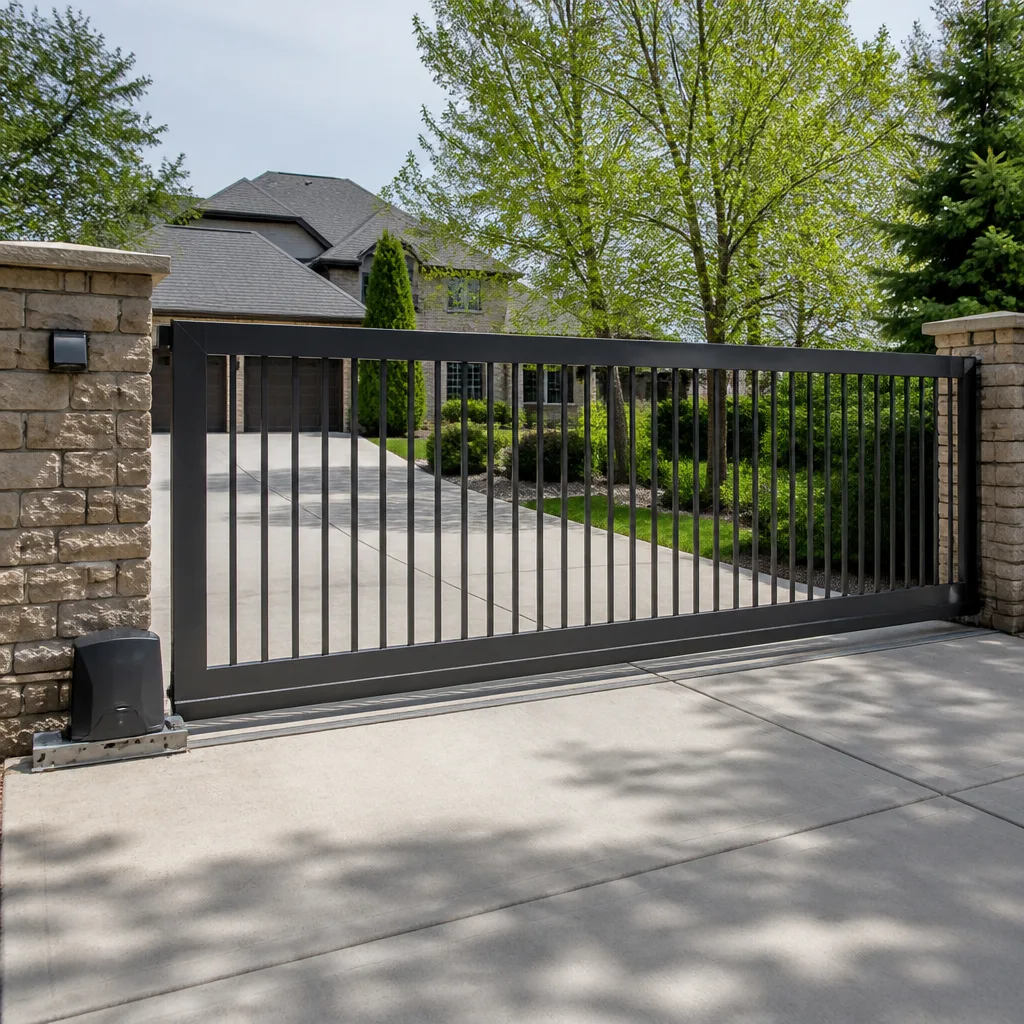 Sliding driveway gates
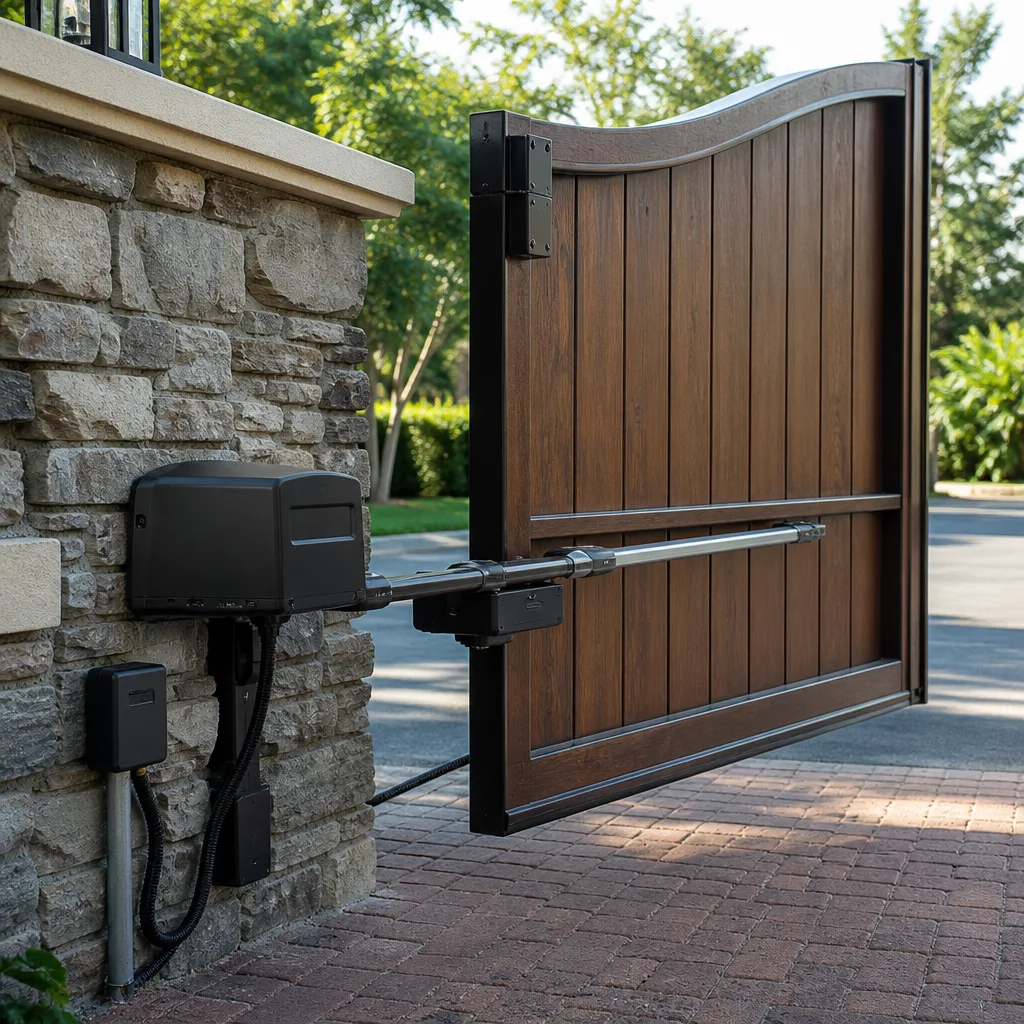 LiftMaster operators
Free on-site gate assessment - hinges, posts, and your LiftMaster or Nice gate operator checked before anything is quoted
The assessment is free and the quote is the invoice.
Get your free estimateSeasonal Gate Repair Care for Miami Gardens: Year-Round Homeowner’s Guide
The worst time to discover your gate’s battery backup is dead is three hours after a Category 1 makes landfall and your power is out for four days. We know because we’ve taken those calls: the storm has passed, the sky is clear, and the homeowner finally tries to open the driveway gate to check for damage, except the gate won’t budge. No power, no backup, no movement. What follows is a guide built around what actually happens to gates in Miami Gardens, not around what happens to gates in Atlanta or Orlando. If you’re evaluating service providers, read Choosing the Right Gate Repair Brand: A Buyer’s Guide for Miami Gardens first. This isn’t a spring-summer-fall-winter maintenance calendar, because those seasons don’t exist here. Miami Gardens has two seasons that matter: hurricane season, and the dry stretch before the next one. Each one damages gates in its own specific way, and each one needs its own specific response.
Styles & brands we work with
Quick Answer
Seasonal gate care in Miami Gardens should be organized around two cycles: pre-hurricane preparation (April through May) and post-storm recovery (June through November), plus a dry-season inspection period (December through March). The single most important pre-season task is verifying your manual-release mechanism and battery backup function, because a gate that only operates on AC power becomes a security risk the moment the grid fails. Most of the damage we repair after storms traces back to skipped pre-season checks, not the storm itself. For professional help, contact our Gate Repair team before the season starts.
Table of Contents
- Why Miami Gardens Weather Demands a Different Gate Care Calendar
- The Pre-Hurricane Season Checklist: April Through May
- Post-Storm Inspection Protocol: June Through November
- Dry Season Focus: December Through March
- Fire Ants and Control Boards: The Pests Nobody Mentions
- Rainy Season Drainage and Track Corrosion
- Battery Backup Systems: What Actually Matters in a Power Outage
- Common Mistakes to Avoid
- When to Call a Professional
- Frequently Asked Questions
- The Bottom Line
Why Miami Gardens Weather Demands a Different Gate Care Calendar
A gate in Miami Gardens doesn’t age the way a gate in Phoenix does, and it doesn’t fail the way a gate in Minneapolis does. What we have here that most of the country doesn’t: six months of daily thunderstorm potential, salt-laced humidity that never really goes away, UV exposure intense enough to crack plastic conduit within five years, and pests that treat an operator housing like rent-controlled real estate. If you follow a generic maintenance calendar written for northern climates, you’ll be lubricating hinges in April when you should be torquing bolts, and you’ll be checking for ice damage in January when you should be checking for rust bloom on track rollers. Our Miami Gardens Gate Repair home page reflects the same logic: this market gets addressed on its own terms. The gate industry’s default maintenance advice assumes four seasons and a frost line. We assume eight months of moisture and a fire ant colony.
The specific failure modes we see most often in Miami Gardens break down like this. Huricane season, from June through November, brings wind loading that loosens operator mounting hardware, rain that infiltrates control board enclosures, and power surges that kill circuit boards outright. Dry season, from December through March, brings low humidity that accelerates grease breakdown on hinges and bearings, plus relentless UV that degrades plastic junction boxes and cable sheathing. Neither season is gentle. The difference is the type of damage each one causes, and the type of preparation each one rewards.
The Pre-Hurricane Season Checklist: April Through May
By the first week of May, every gate in Miami Gardens should have gone through a pre-storm preparation checklist. The goal isn’t to make the gate hurricane-proof; no residential gate is hurricane-proof. The goal is to make sure the gate fails safely and recovers cleanly. A gate that’s prepared correctly will survive the storm in manual mode and return to automatic operation without a service call. A gate that isn’t prepared will survive the storm and then refuse to budge, because loose bolts turned into stripped bolt holes, or because a corroding terminal strip finally gave way under humidity. Here is what the pre-season inspection should actually cover, in order of importance:
- Manual-release function verification. Every automatic gate has a mechanical release that disconnects the operator from the gate, allowing manual operation during a power loss. In a hurricane, that release is the difference between driving out when the power dies and being stuck behind your own gate. Test it in April. Pull the release, push the gate open and closed by hand, and listen for scraping, grinding, or resistance. A manual release that hasn’t been exercised in two years often seizes exactly when you need it most.
- Operator mounting bolt torque. Wind loading works on gate hardware the same way it works on fences and roofs: repeated gusts cycle stress through every joint. An operator bolted to a concrete pad can work itself loose over a single season of afternoon thunderstorms. Check the mounting hardware on both the operator and the gate hinges. If a bolt turns easily by hand, that’s a problem to fix before the first named storm forms.
- Safety loop sensitivity adjustment. The loop detector buried under your driveway is what tells the gate when a vehicle is present, and it’s also part of the safety system that stops the gate if someone is in its path. Humidity, soil moisture, and temperature swings all shift loop sensitivity. A loop that was calibrated in January may behave differently by May. A loop that’s too sensitive will hold the gate open forever; a loop that’s not sensitive enough will let the gate close on a car. This is a five-minute adjustment for a technician with the right meter.
- Battery backup power test. Disconnect the operator from AC power and run the gate through three full cycles on battery alone. If the battery in your Miami Gardens electric gate repair system is over two years old, it may not hold enough charge to operate the gate more than once or twice. After a hurricane, you may need twenty or thirty operations before power is restored. Replace weak batteries in April, not in November.
- Enclosure seal inspection. The plastic or metal housing that protects your operator’s control board is the gate’s only defense against wind-driven rain. Check the gasket around the lid, look for cracks in the housing itself, and make sure the conduit running into the box is sealed at both ends. Water that enters through a failed gasket pools at the bottom of the enclosure and shorts the board from below. We’ve replaced more control boards due to gasket failure than due to direct lightning strikes.
Every one of these five tasks is something a homeowner can learn to inspect. Some of them, like the safety loop adjustment and the battery capacity test, require a multimeter and a basic understanding of how the system works. If anything in that list sounds like it’s beyond your comfort level, our gate repair in Miami Gardens service handles every item on this checklist in a single visit.
Post-Storm Inspection Protocol: June Through November
After a storm passes, the instinct is to drive the car out, check the yard, and move on. The gate needs more than that. Operating a gate that took on storm water without inspecting it first can turn a small problem into a dead control board. This is the most expensive mistake we see homeowners make in Miami Gardens: they power up a wet operator and the board sparks, shorts, and becomes scrap in half a second. Here is the post-storm inspection protocol we recommend, in the exact order:
- Check for standing water before touching anything. If water pooled around the operator base, the gate track, or the junction boxes, wait for it to drain. Then look for a high-water mark on the operator housing. If the water line reached the control board, do not power the operator up. Call a technician. A wet control board can sometimes be cleaned and dried and put back into service, but only if it was never energized while wet. Powering it up destroys it permanently in most cases.
- Inspect the operator housing for displaced covers or broken conduit. Flying debris can crack a plastic housing or knock conduit loose from a fitting. If water could have entered, treat the system as wet until proven dry.
- Run the gate manually first. Use the manual release to disengage the operator and push the gate through its full travel by hand. This tells you whether the mechanical structure is sound before you apply power. If the gate binds, scrapes, or won’t travel its full path, stop and assess before re-engaging the operator.
- Check for shifted concrete or settled gate posts. Hurricanes move soil. A gate post that shifted even a quarter-inch will throw off the closing alignment, and an operator that has to work against a misaligned gate burns through its gearbox faster than it should.
- Re-engage the operator and test the automatic cycle once. Watch the gate through the full open-and-close cycle, listening for changes in motor pitch, looking for hesitation, and confirming the gate stops at the correct positions. If anything is off, disconnect it and call for service before running additional cycles.
One thing to know clearly: a post-storm inspection is not the time to reprogram a keypad or toggle DIP switches. If the gate ran before the storm and now runs differently, something changed, and changing settings to compensate is almost always the wrong fix. Diagnose first, adjust second.
Dry Season Focus: December Through March
When the rain stops and the humidity drops, Miami Gardens doesn’t turn into Vermont. It turns into a place where the sun does to gate hardware what the rain does during hurricane season: it breaks things slowly and predictably. The dry season damages gates differently than the wet season, and most homeowners don’t suspect it until something seizes.
The first dry-season failure is lubricant breakdown. Grease that stays pliable in humid air goes stiff and dry when the air turns arid. Hinges that were quiet in October start creaking in January. That creak is metal-on-metal contact, and every cycle of the gate wears bearing surfaces down further. The fix is relubrication with a grease rated for South Florida’s temperature range, which doesn’t get cold enough to thin most lubricants but does get hot enough to bake the cheap ones. We prefer a synthetic, high-temperature grease on hinge pins and wheel bearings, applied sparingly enough that it doesn’t attract sand and grit.
The second dry-season failure is UV degradation on exposed cable conduit. PVC conduit, especially the thin-wall stuff sold at big-box stores, turns brittle after three to five years of naked Florida sun. The first sign is usually a crack at a fitting or a chalky, faded surface. Once the conduit cracks, water gets in during the next rainy season and shorts the low-voltage wires inside. The fix is to replace degraded conduit before the rains return, not after.
Dry season is also the easiest time to catch rust bloom on gate hardware and address it with a wire brush and a rust-inhibitive paint. The air is dry enough that paint cures properly, and the rust isn’t hidden under a layer of morning dew. Do it in February, not in July.
Fire Ants and Control Boards: The Pests Nobody Mentions
If you live in Miami Gardens, you already know about fire ants. What you may not know is that fire ants have a specific, documented affinity for gate operator housings. An operator box mounted on a concrete pad is warm, dry, protected from rain, and located at the perfect height: low enough that ants can access it easily, high enough that predators can’t. We open operator covers all year long and find ant colonies nested inside the enclosure, and the ants aren’t just living there. They’re farming. Fire ants bring soil up into the housing, and that soil holds moisture against the control board. Ant activity plus humidity is a short circuit waiting to happen.
The worst cases involve ants shorting across relay contacts or building bridges across circuit board traces. A single ant body across the wrong pair of solder points can send a false signal that stops your gate mid-cycle or keeps it from closing at all. The fix is not insecticide inside the operator, which risks corrosion on the very contacts you’re trying to protect. The fix is sealing the conduit entry points so ants can’t enter in the first place, keeping vegetation trimmed away from the operator base, and checking inside the enclosure on a regular schedule. If you see dirt inside the housing, you have ants or rodents, and you have a shorter timeline to board failure than you think. For gate systems using Linear, Viking, or DoorKing operators, we see this most often in the units with bottom-facing wire entries, which are essentially ant doorways until they’re sealed.
Rainy Season Drainage and Track Corrosion
Sliding gates in Miami Gardens face a problem that swing gates don’t: a track channel that fills with water. The track is essentially a steel rail set into the driveway at ground level, and when the ground saturates during rainy season, water sits in the channel for days at a time. Roller bearings submerged in standing water rust fast. A bearing that started the rainy season clean can be seized by September if the track doesn’t drain.
The long-term fix is grading. The concrete around the track should slope away from the channel so water runs off rather than pooling. If the track itself has sagged or heaved over time, regrading the surrounding concrete may not be enough; the track may need to be reset. The shorter-term fix is drainage channels cut into the track bed at the lowest points, which we do on a case-by-case basis where the existing concrete makes regrading impractical. Our gate installation in Miami Gardens work always accounts for drainage from day one, because a track laid without drainage in South Florida is a track we’ll be repairing within three years.
What homeowners can do on their own: keep the track channel clear of sand, leaves, and landscape debris. A track that’s full of sand holds water longer and grinds grit into the bearing surfaces every time the gate runs. A quick sweep after each heavy rain costs thirty seconds and buys bearing life.
Battery Backup Systems: What Actually Matters in a Power Outage
Here’s a scenario we see several times every hurricane season: the power goes out, the homeowner needs to get to work, the gate won’t move, and they call us in a panic. The first thing we ask is whether the manual release works. The second thing we ask is whether the battery backup was tested this year. Most of the time, the answer to the second question is no.
A battery backup does one thing: it keeps the gate operator powered when the grid goes down. What most people don’t realize is that these batteries are lead-acid or lithium, and both degrade on a schedule regardless of whether the gate is used. A lead-acid backup battery in South Florida heat lasts about two to three years. A lithium battery lasts longer but still ages, and by the time you need it, it may only hold enough charge for a handful of cycles. A gate that runs twenty cycles a day in normal operation will drain a weak backup quickly. If Ghost Controls or Viking is your operator brand, the battery compatibility matters; mixing a mismatched battery into a backup circuit can shorten its life further, and we see it often.
Testing is simple and worth doing twice a year, once in May and once in September. Kill the AC breaker, run the gate through a full open-close cycle on battery, and watch for the telltale slowdown near the end of the cycle that signals a fading battery. If the gate strains or fails to complete the cycle, replace the battery before hurricane season peaks.
Common Mistakes to Avoid
- Lubricating without cleaning first. Spraying new grease over old, grit-laden grease just pushes the grit deeper into the bearing surface. Wire-brush the hinge pin or bearing, wipe it clean, then lubricate. This mistake is responsible for more premature bearing wear in Miami Gardens than anything except standing water.
- Powering up a wet operator after a storm. We’ve already said this, but it’s worth repeating because it keeps happening. Water inside the enclosure is survivable if the system stays off. Energize a wet board and you’ll be buying a new one. If you see water or mud inside the operator, leave the power off and call us.
- Using general-purpose garage door lubricant on a gate operator. Gate operators aren’t garage door openers. Different torque profiles, different duty cycles, different grease specs. The wrong lube breaks down faster and leaves residues that interfere with limit switches. Use what the operator manufacturer recommends, or have someone who knows the brand service it.
- Adjusting limit settings to fix an alignment problem. If your gate is hitting the wrong spot, the fix is usually mechanical: a shifted hinge, a bent bracket, a track that’s moved. Changing the limit settings makes the gate stop in a different wrong place and puts extra strain on the motor. Find the mechanical problem first.
- Ignoring a slow gate during dry season. A gate that moves slower than it used to is telling you something: a failing bearing, a motor on its way out, or a low-voltage condition at the operator. By the time it stops completely, the repair is usually bigger and more expensive than it would have been months earlier.
- Landscaping too close to the operator. Hibiscus, croton, and other South Florida favorites grow fast in the wet months, and they grow into gate hardware. Leaves and stems that touch the operator housing create a moisture bridge, and root systems that spread under the gate track shift the concrete over years. Keep a clear zone around the operator and the track.
When to Call a Professional
If your gate won’t open after a power restoration and the manual release won’t budge, call before you force it. If you open the operator cover and find water, mud, or ants, leave the power off and call before you power up. If your gate stops mid-cycle, reverses on its own, or makes a sound like gravel in the gearbox, something mechanical or electrical is degrading, and running it more won’t fix it. Miami Gardens Gate Repair offers free estimates in Miami Gardens, and one call covers both the mechanical gate structure and the electronic components, because we work on gates exclusively and we carry parts knowledge across LiftMaster, FAAC, BFT, Linear, Viking, Ghost Controls, DoorKing, Elite, and Mighty Mule. See our The Complete Gate Repair Guide for Miami Gardens Homeowners for more seasonal maintenance tips. Call (855) 382-0732 and we’ll tell you what’s wrong before you agree to pay for anything.
Frequently Asked Questions
A pre-hurricane inspection with basic adjustments and relubrication typically runs between $85 and $175 in Miami Gardens, depending on the gate type and the number of operators. Battery replacement, track regrading, or control board work is additional. Call (855) 382-0732 for an exact quote for your gate; estimates are free, and the price is agreed before any work starts.
Twice a year minimum: once in April or May before hurricane season, once in November or December before dry season. If your gate runs more than thirty cycles per day, or if you’re near the coast where salt air accelerates corrosion, three or four visits a year is not excessive.
You can inspect, clean debris from the track, and test the manual release safely. Anything involving the electrical system, the control board, or the operator’s internal components should be left to a trained technician. Automatic gates carry real risk of entrapment, pinch injuries, and electrical shock, and the safety systems that prevent those hazards need calibration equipment most homeowners don’t own.
The team at Miami Gardens Gate Repair is factory-familiar with nine major gate brands: LiftMaster, FAAC, BFT, Linear, Viking, Ghost Controls, DoorKing, Elite, and Mighty Mule. If your operator isn’t on that list, most residential and light-commercial equipment can still be diagnosed and repaired; call (855) 382-0732 with your brand and model and we’ll tell you honestly whether we can help.
Not necessarily. Age alone isn’t a reason to replace an operator; if the motor runs clean, the control board is dry, and the mechanical hardware is sound, an older gate can continue to serve reliably. The smart approach is to have it inspected and make the replacement decision based on condition, not calendar age. We would rather tell you your gate has three more seasons in it than sell you a new one you didn’t need.
Yes. Full installation services are available, from single residential swing gates to dual sliding commercial operators, including the power run, safety loops, and access control. Call (855) 382-0732 for a free measure and a written price.
The Bottom Line
Miami Gardens gates fail in predictable ways, on a predictable schedule, and nearly all of it is preventable with the right maintenance at the right time. Torque your operator bolts in April. Test your battery backup in May. Stay off a wet control board after a storm. Regrade your track if water pools. Keep ants out of the enclosure. Do these things and your gate will run through hurricane season and dry season year after year. Skip them and you’ll find yourself calling for an emergency repair at the worst possible moment, because gates never break when it’s convenient. Browse our more guides & resources to stay ahead of common failures. The calendar in Miami Gardens has two seasons, and your gate never gets to rest during either one.
Written by the team at Miami Gardens Gate Repair, serving Miami Gardens since 2012.
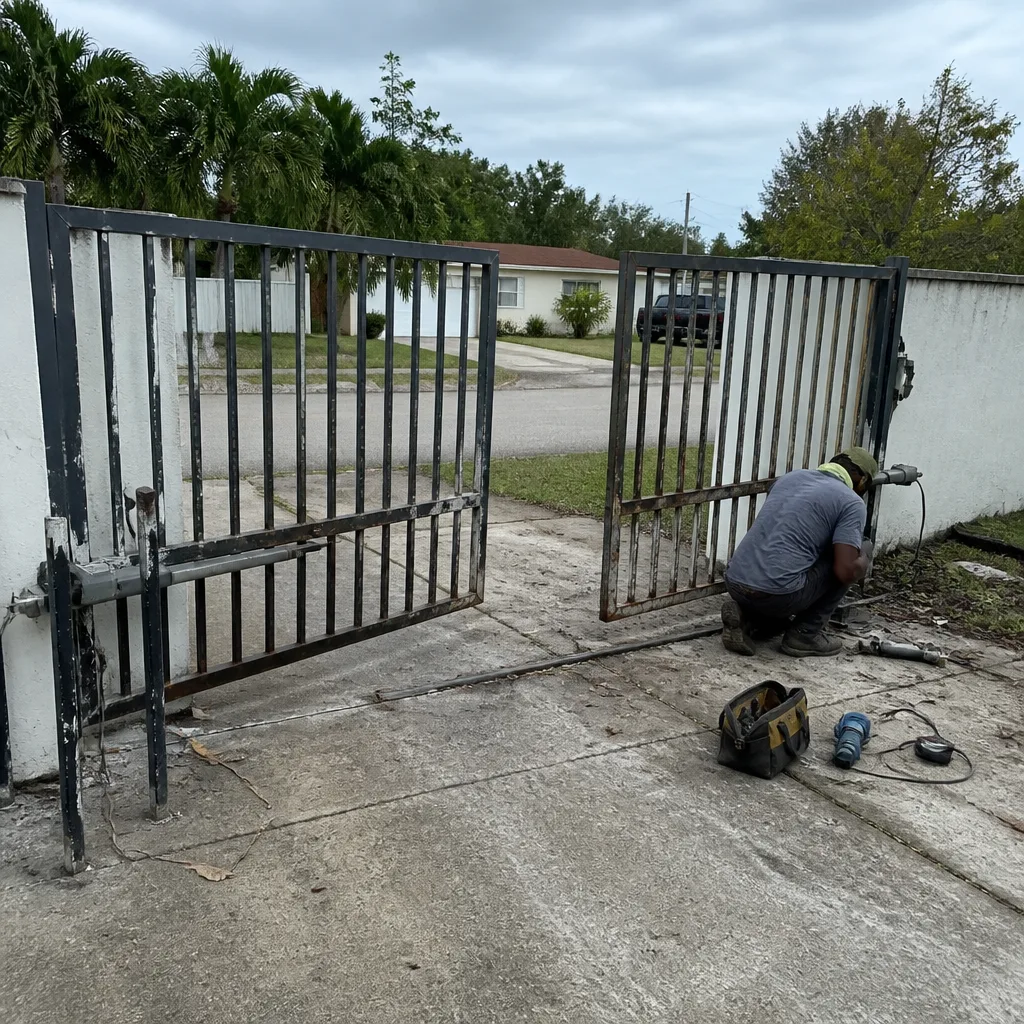
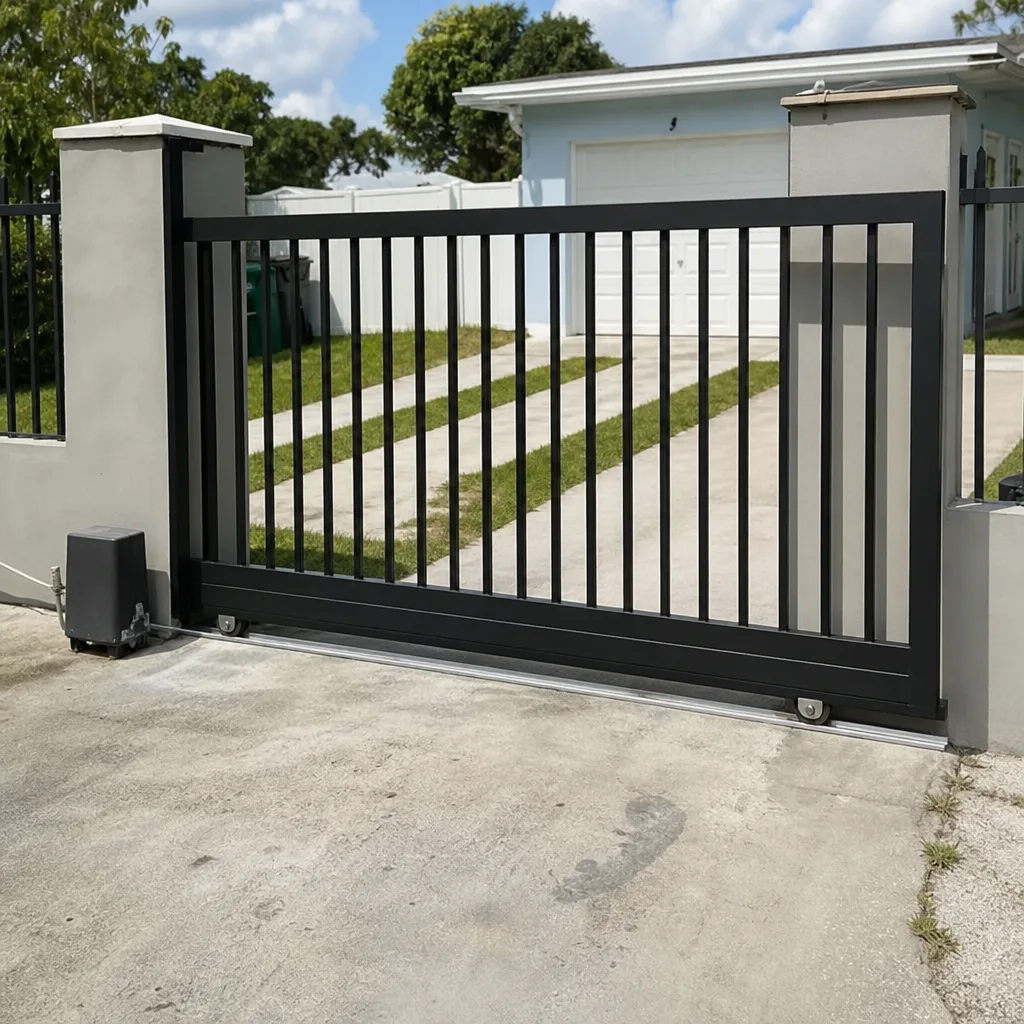
See the difference
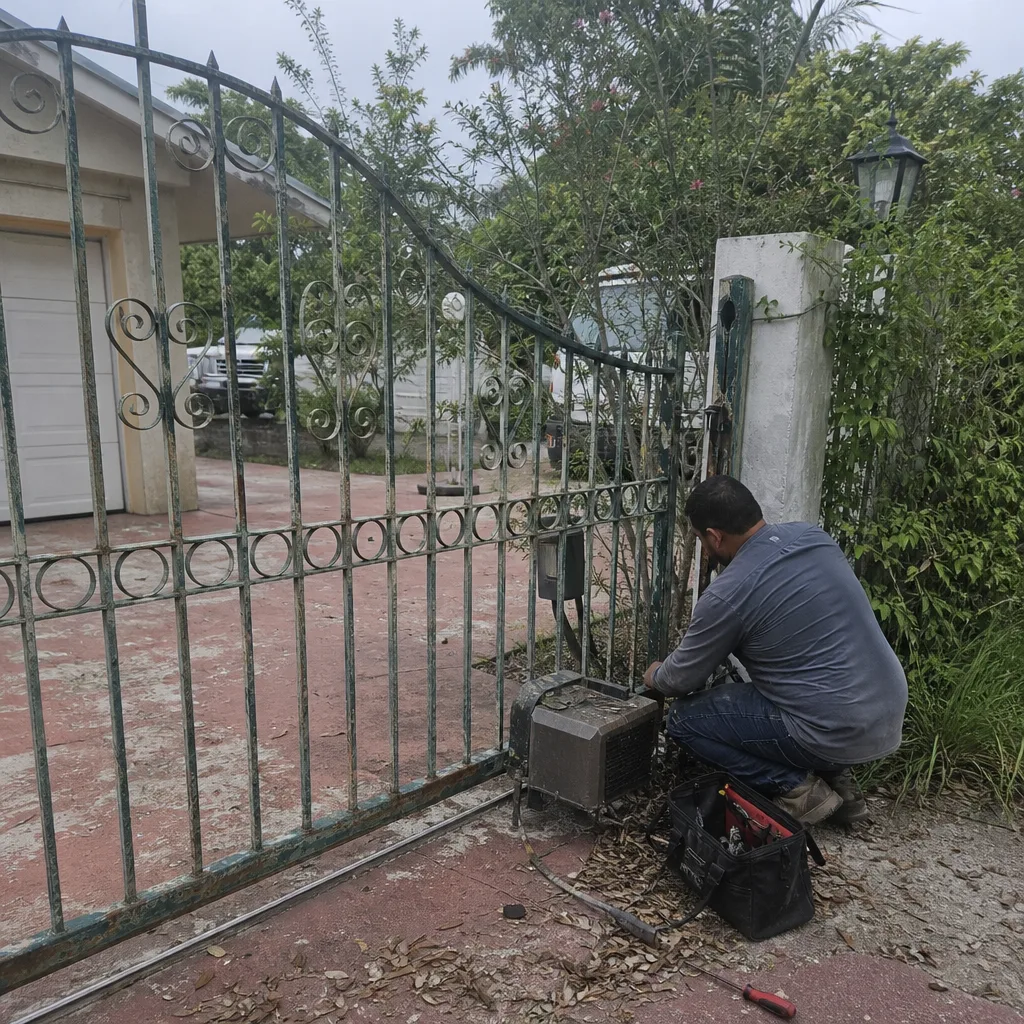 Before
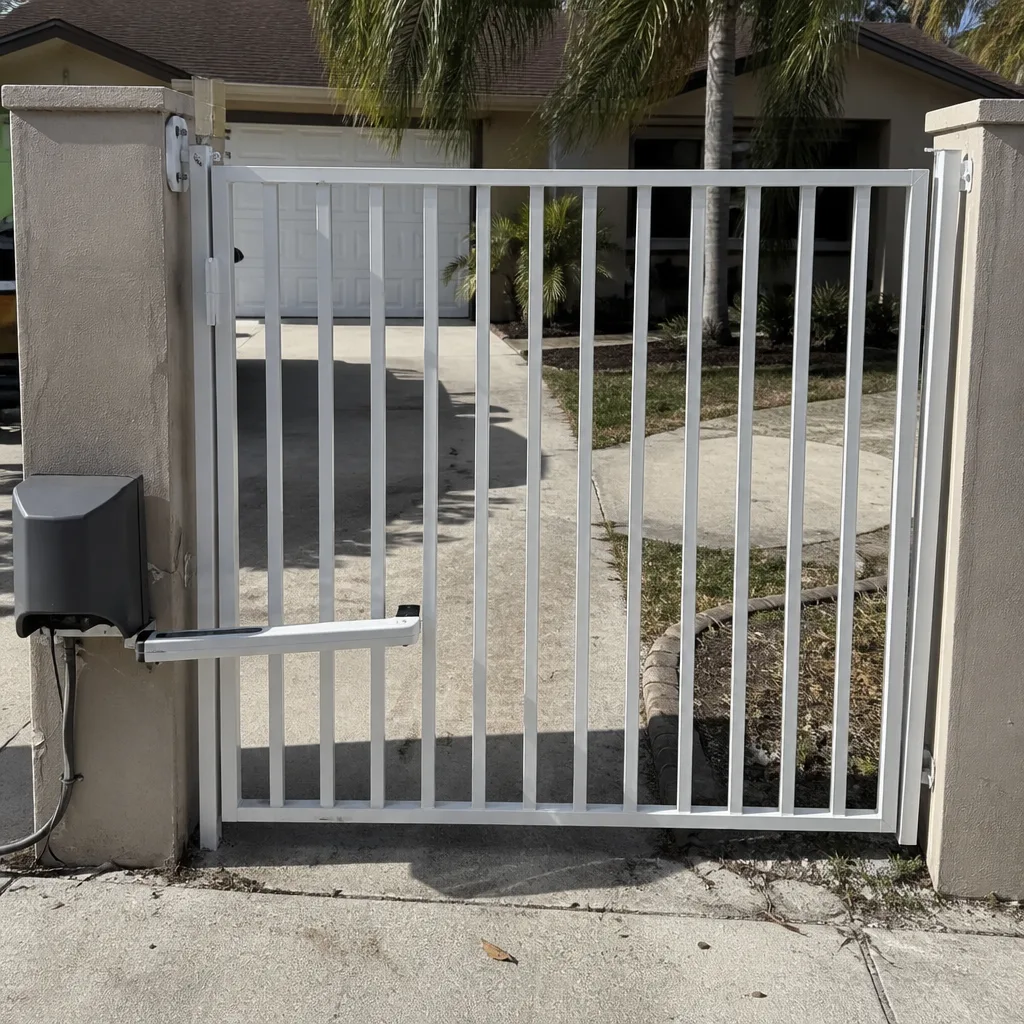 After
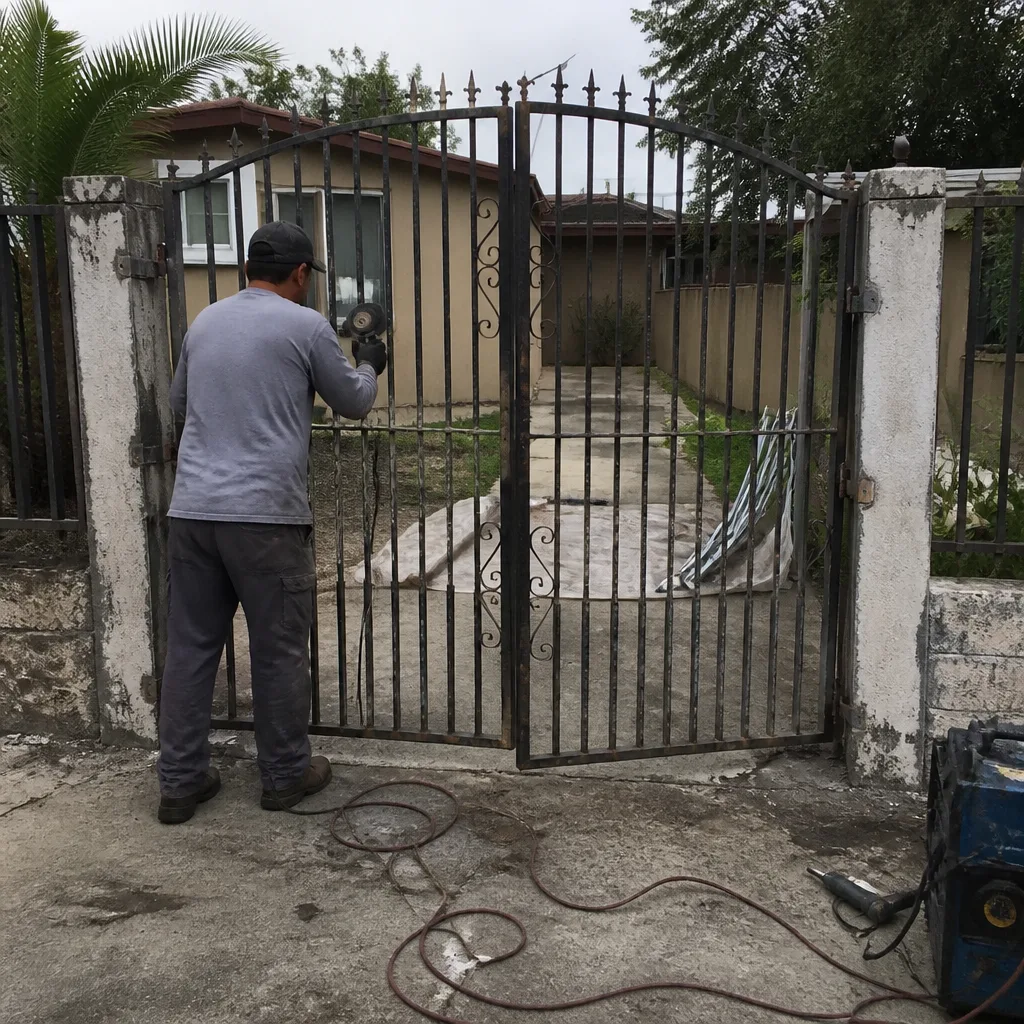 Before
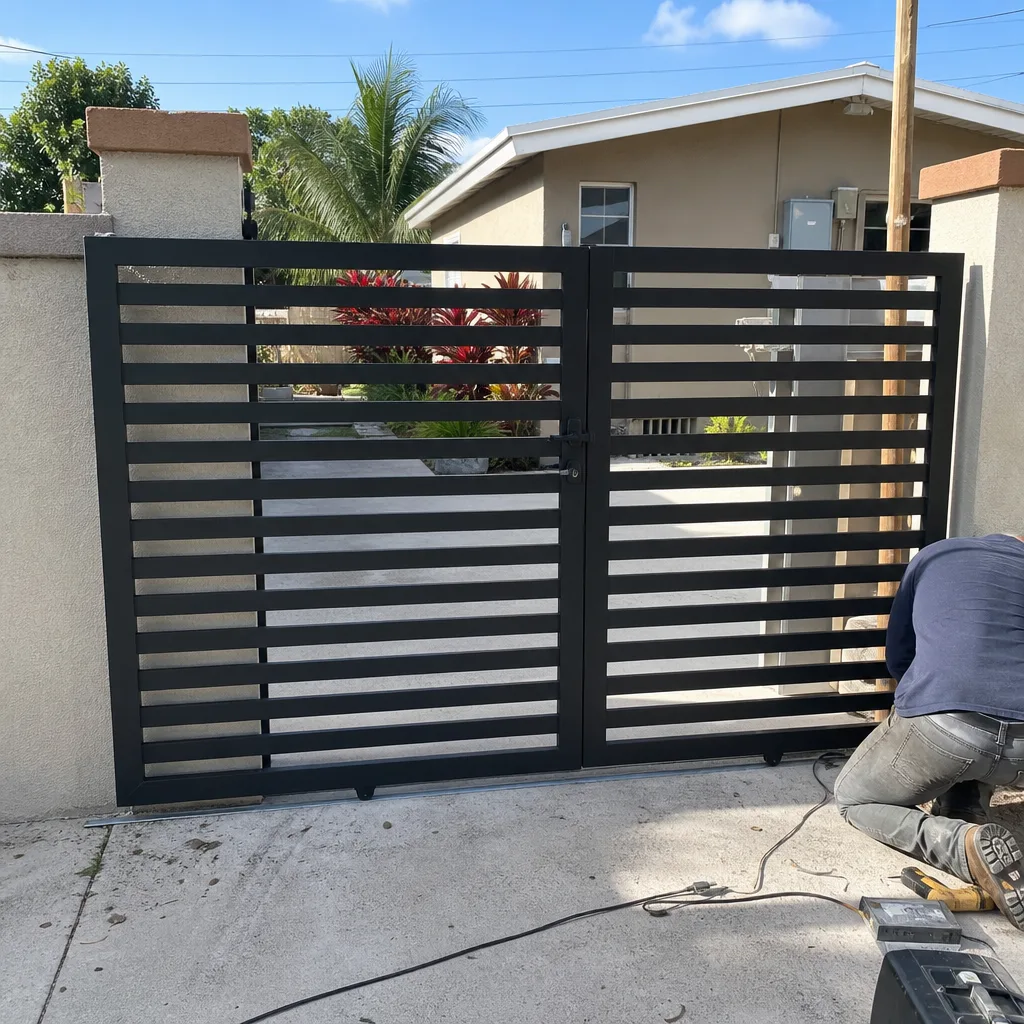 After
 Before
 After