Last updated October 30, 2026
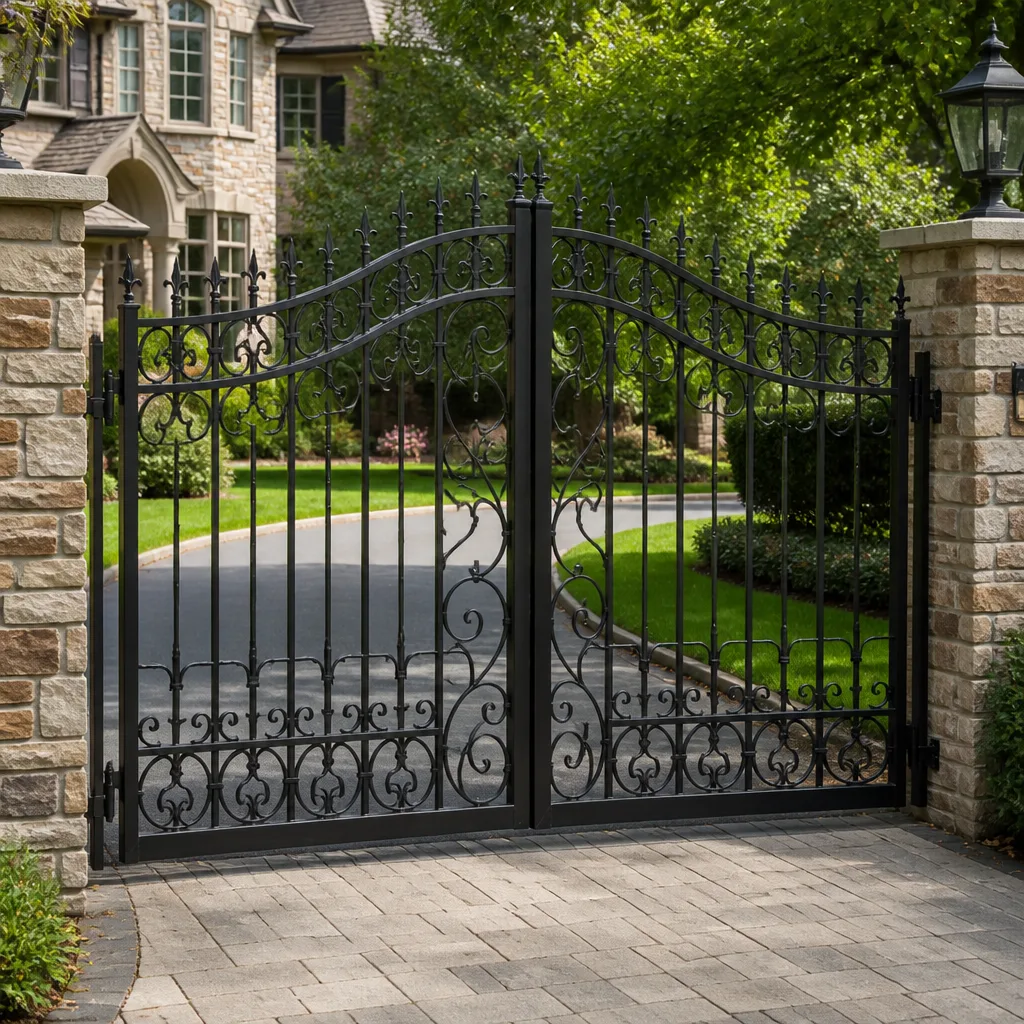 Wrought iron
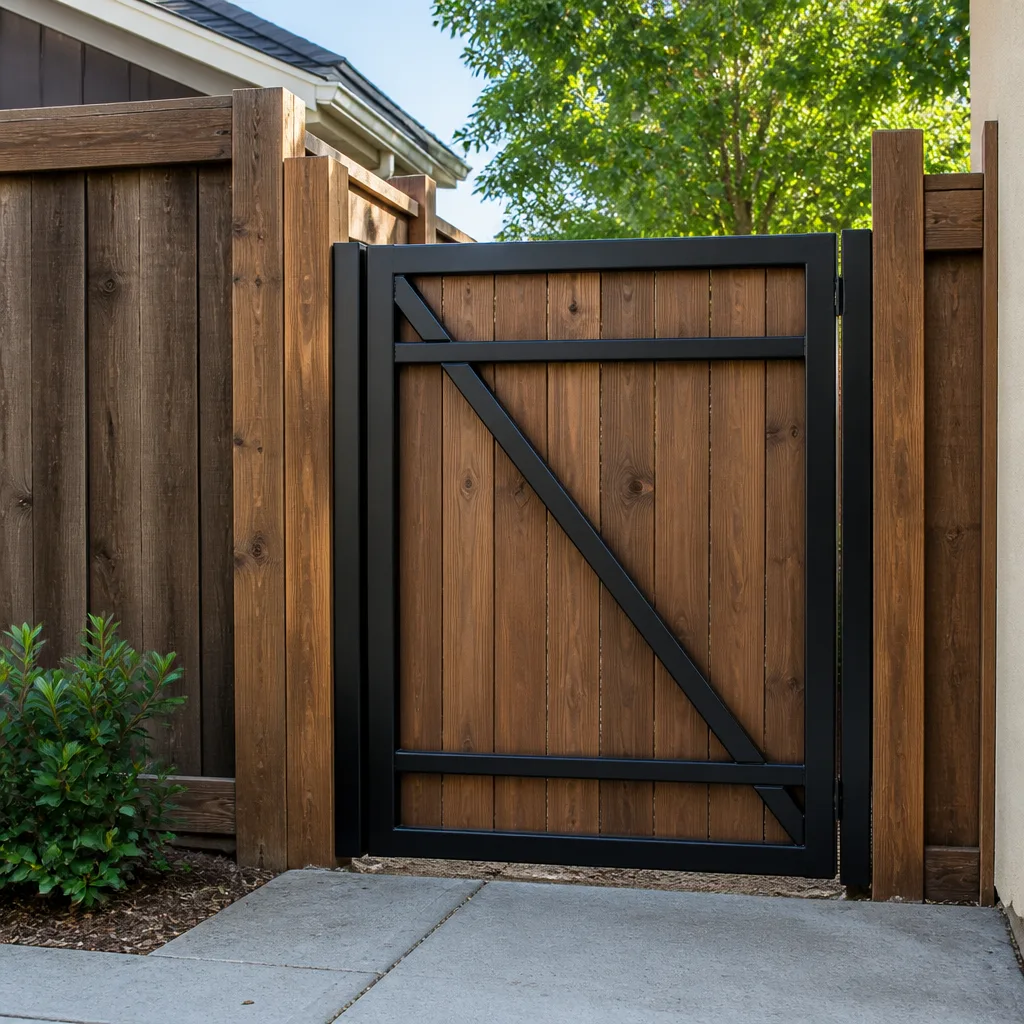 Wood & steel frame
 Farm & ranch
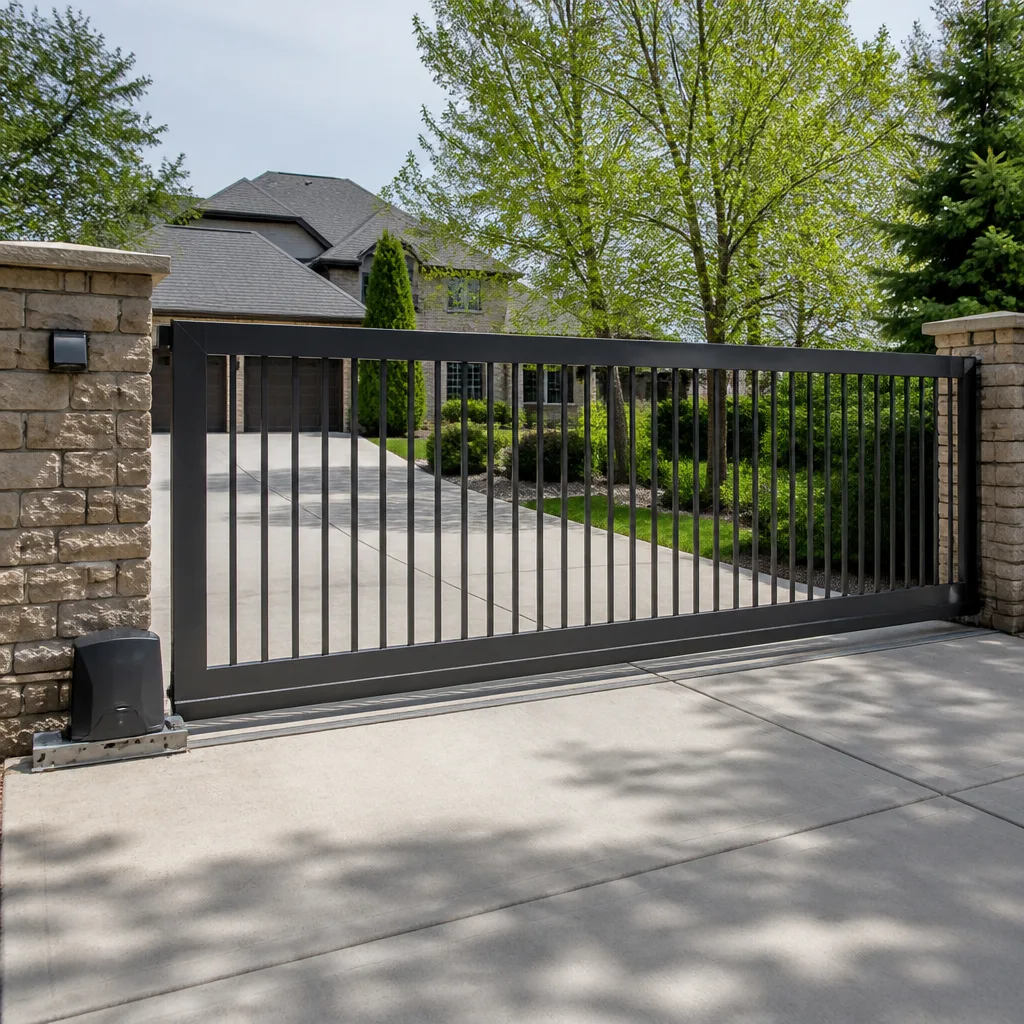 Sliding driveway gates
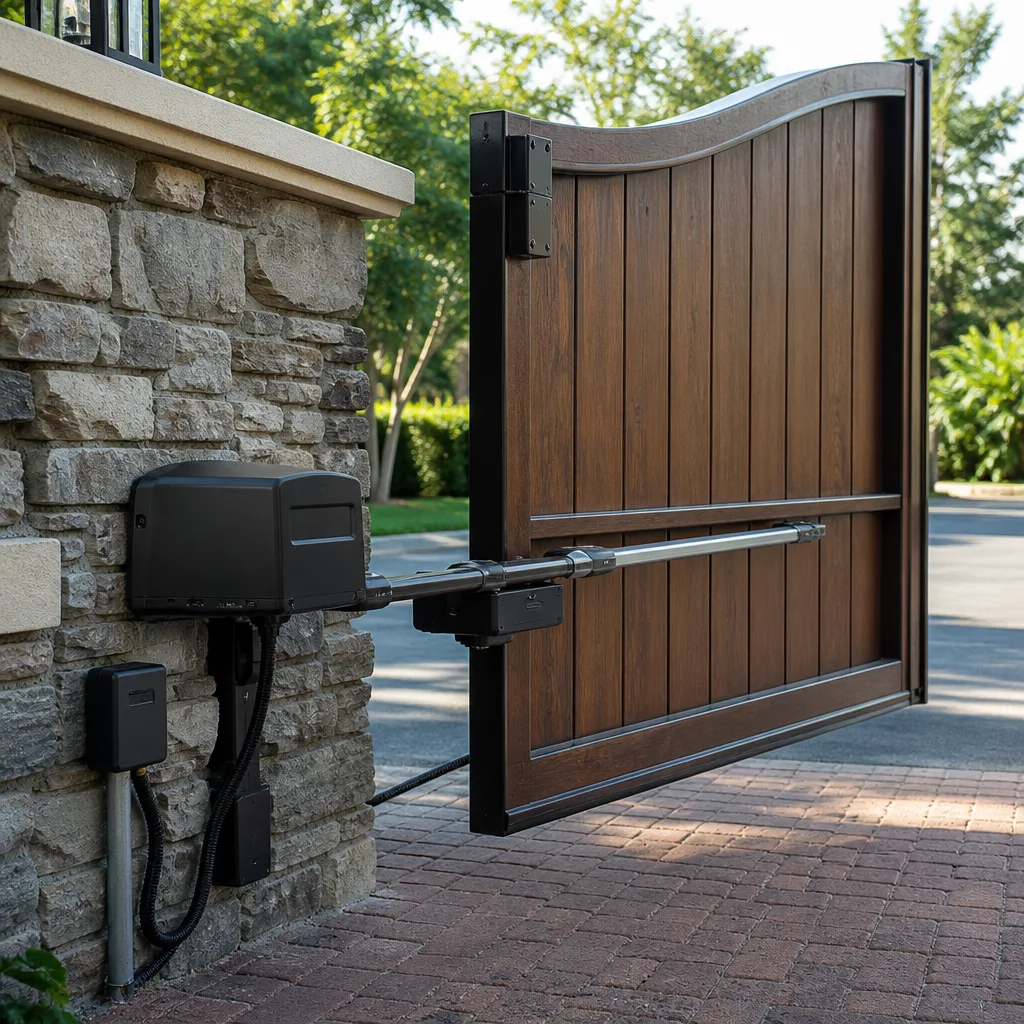 LiftMaster operators
Free on-site gate assessment - hinges, posts, and your LiftMaster or Nice gate operator checked before anything is quoted
The assessment is free and the quote is the invoice.
Get your free estimateChoosing the Right Gate Repair Brand: A Buyer’s Guide for Miami Gardens
Here’s a fact most people don’t learn until their gate is stuck half-open at 7 a.m.: the brand of your gate operator has more to do with your long-term repair costs than the installer who mounted it on the post. In Miami Gardens, where summer humidity settles on a control board like condensation on a cold glass and the salt-saturated coastal air eats at untreated housings, that brand choice compounds quickly. The cheapest operator on the market uses a proprietary control board and when it fails, the only replacement is another unit from the same brand at full price. This guide breaks down the brands that hold up in South Florida’s climate, the ones that strand you waiting a week and a half for a shipped part, and how to know which one you already have sitting at the end of your driveway. For The Complete Gate Repair Guide for Miami Gardens Homeowners, see our dedicated resource.
Styles & brands we work with
Quick Answer
For most Miami Gardens residential gates, LiftMaster and FAAC offer the best combination of local parts availability, weather-resistant housings, and long-term repair economics. Viking and Elite residential operators are solid mid-tier choices when matched correctly to vehicle cycles per day. Ghost Controls and Mighty Mule are budget-friendly options that make sense for light-duty driveway gates but tend to struggle in our humidity over a 5-year cycle unless you upgrade the housing and keep the board dry.
Table of Contents
- What Actually Matters in a Miami Gardens Gate Brand
- Climate Suitability: How the Brands Hold Up Here
- Parts Availability in South Florida: Same-Week vs. 10-Day Delays
- Proprietary vs. Open-Architecture Control Boards
- Duty Cycle Ratings: Matching Brands to How You Use the Gate
- Warranty Structures: What “Limited Lifetime” Actually Means
- Common Mistakes to Avoid
- When to Call a Professional
- Frequently Asked Questions
- The Bottom Line
What Actually Matters in a Miami Gardens Gate Brand
Walk into any gate supplier in South Florida and you’ll get a push toward whatever’s on the shelf that month. That’s not a strategy. What matters for a gate in Miami Gardens comes down to four things, in this order: how the weather treats the hardware, how fast you can get a replacement part when it does fail, how much a control board costs to replace, and whether the operator is sized for how many times a day your gate does its job.
We work on gates full time. That’s not a tagline; it’s the only work we take on. From Miami Gardens Gate Repair home services to complete operator swaps, we see the same failures across the same brands year after year. What surprises homeowners is rarely what they expect. The motor didn’t burn out because it was cheap. The control board didn’t fail because of a bad capacitor. In Miami Gardens, the number-one killer of gate operators is moisture ingress through bad seals and cheap housing gaskets. Brand choice determines how well those seals are designed.
The second thing that matters is parts. A gate that’s down for ten days while a control board ships from the West Coast is a gate that’s no longer providing security, convenience, or curb appeal. You’re paying for that downtime in ways that never show up on an invoice.
Here’s what we tell homeowners in Miami Gardens when they’re comparing brands:
- Buy the housing first, and the motor second. A powerful motor in a cheap plastic enclosure won’t survive five summers of Miami humidity.
- Check part lead times before you buy. Some brands have authorized distributors in Miami-Dade with shelves stocked. Others drop-ship everything from out of state.
- Ask about the control board architecture. If the brand runs a proprietary board with no cross-compatible alternative, a failed board means a full-unit replacement or an expensive OEM part.
- Match the duty cycle to your actual use. A single-family swing gate doing 20 cycles a day stresses an operator differently than a 40-unit multi-family slide gate at 300 cycles a day.
Climate Suitability: How the Brands Hold Up Here
Miami Gardens sits far enough inland that we don’t get the full blast of salt spray that Key Biscayne or Sunny Isles does, but the air is still marine-air humid all year. Combine that with June-through-September afternoon storms, and every gate operator in this city is fighting the same three things: UV degradation on exposed plastic housings, condensation inside control boxes, and corrosion on uncoated steel brackets and chain drives.
Some brands design for this. Others don’t.
LiftMaster: The residential operators in the LA400 and LA500 series use cast aluminum housings with silicone-gasket sealed access doors. We rarely see moisture-related control board failures on properly installed LiftMaster units. The gearboxes on the LA500 hold up well to the heat load we get in August. After five years, the housing on a LiftMaster typically looks scratched but not chalky. That’s UV-resistant polymer work done properly.
FAAC: FAAC builds their housings in Italy’s industrial north, and it shows. The sealed enclosures on their residential swing operators (the 390 and 400 series) hold up exceptionally well in high-humidity environments. FAAC uses stainless steel fasteners as standard, where other budget brands use zinc-plated screws that start rusting at the threads by year two. The one drawback in Miami Gardens is that FAAC authorized service in Miami-Dade is thinner than LiftMaster or DoorKing, which affects parts wait times more than it affects build quality.
Viking: Viking’s residential operators lean industrial in construction, with powder-coated steel and marine-grade connectors on the better lines. For salt-adjacent exposure, Viking’s commercial-duty housing is among the most corrosion-resistant we’ve seen when maintained annually. Their residential line is more modest but still outbuilds the budget options.
Elite: Elite gates have a loyal following in South Florida gated communities because the slide operator housings are simple, heavy, and sealed with a light gasket. The weak point on Elite units in our climate is the limit switch assembly, which sits in a spot that collects dust and humidity. Annual cleaning solves it. Skip the cleaning and the switch fails, which makes the gate think it’s at the wrong position.
Ghost Controls: These climbed in popularity because of the price point and the easy DIY install. The housings, though, are closer to mid-grade plastic. In Miami Gardens, we see Ghost Controls boards fail from humidity intrusion at a rate that makes the five-year cost of ownership approach a LiftMaster unless you mount the operator under a protective cover and add a heater kit for winter condensation cycles. It’s not a bad operator. It’s a bad operator for a subtropical climate if left fully exposed. For anyone looking at Gate Repair in Miami Gardens, the Ghost Controls service calls we take are overwhelmingly board-related, not motor-related.
Parts Availability in South Florida: Same-Week vs. 10-Day Delays
An operator is a mechanical asset. That means it will need parts at some point. The question isn’t whether the part exists. The question is how long you wait without a working gate.
In Miami-Dade, the parts situation splits cleanly into two tiers:
Tier 1: Same-week local parts. These brands have authorized distributors or well-stocked supply houses in the Miami and Broward metro:
- LiftMaster: The widest local parts network in South Florida. Control boards, gearboxes, limit switches, receivers all typically available within two to three days, often same-day from a distributor in Medley or Doral.
- DoorKing: DoorKing maintains strong distribution through authorized installers across Miami-Dade. Circuit boards and actuator parts come through fast, especially for the residential 9150 series.
- Viking: Commercial and residential parts are stocked by multiple South Florida access-control suppliers. Gate arm operator parts are typically on hand locally.
Tier 2: Shipped-in parts. These brands may have excellent products, but your gate stays down longer when a board fails:
- FAAC: The operators are excellent, but the Miami parts pipeline for FAAC is thinner. Many parts ship from a regional hub in Georgia or out of the Texas facility. Expect three to seven business days for most electrical components.
- Elite: Elite parts can be tricky. The brand has a smaller U.S. distribution footprint than LiftMaster or DoorKing. If your local installer doesn’t stock Elite boards, you’re looking at a week or more.
- Ghost Controls: Ghost Controls runs heavily through e-commerce channels. Replacement boards and accessories are available online but rarely on a local shelf. Expect five to ten business days for many board replacements.
- Mighty Mule: Priced for homeowners who buy off a shelf and install themselves. Parts are all mail-order through the parent company. The boards fail regularly in Miami humidity. For a light interior gate, that’s acceptable. For a driveway gate at the only entrance to the property, it’s a security problem.
If you’re considering a new installation or an operator replacement in Miami Gardens, ask the contractor where the replacement parts would come from if the board drops in two years. A specific local distributor name is the answer you want. “We can order it” means your gate may be down for over a week.
Proprietary vs. Open-Architecture Control Boards
This is the part of the brand conversation that most homeowners never have, and it’s the one that determines whether a five-year-old operator gets a $300 board replacement or a $1,500 full-unit swap.
The control board is the small circuit board inside the operator housing that receives signals from your remote, your keypad, or your intercom system, and tells the motor what to do. It’s the brain. And some brands make their brains non-replaceable.
Proprietary boards: The brand uses a custom board with a custom pin configuration and custom firmware. There is no aftermarket equivalent. When that board fails, you buy the OEM part at the OEM price, or you buy an entire new operator. Ghost Controls and Mighty Mule both fall into this category on their budget lines. The operators are inexpensive upfront. The replacement board, when available, often costs 60 to 70 percent of a brand-new unit. Several budget models don’t sell a standalone replacement board at all; the only fix is a full operator replacement.
Open-architecture boards: The board is standardized enough that either a generic aftermarket board or a cross-compatible part from another manufacturer can run the operator. LiftMaster has enough market penetration that aftermarket support exists. DoorKing’s access-control systems use standard relay logic on many models. Viking has compatible third-party boards for their commercial operators. FAAC boards are proprietary to FAAC, but the brand sells standalone replacement boards for nearly all models, and it’s a $200 to $400 repair rather than a $1,200 replacement.
The math is simple long-term. A homeowner in Miami Gardens who buys a $400 DIY-friendly operator with a proprietary board will likely replace the entire unit twice in ten years. A homeowner who buys a $900 operator with a replaceable board will replace the board once, maybe twice, at $250 to $400 each. Over a decade, the cheap operator wins the initial price and loses the total cost.
When we do Electric Gate Repair in Miami Gardens, the diagnosis always starts at the board. We test the power input, the relay state, the limit inputs, and the remote receiver signal path before recommending board replacement. If a board repairs and reflashes cleanly, we recommend the repair. If it’s a proprietary board on a budget unit from a brand that doesn’t sell standalone boards, the honest answer is a replacement operator. We’ll tell you which one you actually need.
Duty Cycle Ratings: Matching Brands to How You Use the Gate
A “duty cycle” is the percentage of time an operator can run before it needs to cool down. It’s typically stated as “continuous duty,” “intermittent duty,” or “30 minutes per hour.” What this translates to in real life is how many open-close cycles a day your gate can handle before the motor overheats and trips the thermal overload.
Getting the duty cycle wrong is the most common brand misapplication we see in Miami Gardens. Here’s the typical pattern, broken down by gate type:
Residential Single-Family Swing Gate
Expected use: 15 to 40 cycles per day. Brands that fit: LiftMaster LA400, FAAC 390, Ghost Controls residential line, Elite residential swing. Where it goes wrong: Someone installs a Mighty Mule on a gate that gets used by four drivers coming and going all day, plus contractors, landscapers, and food delivery. By month eight, the thermal overload trips every afternoon. The operator wasn’t under-powered at purchase; it was under-matched at day one.
Multi-Family Community Slide Gate
Expected use: 150 to 400 cycles per day. Brands that fit: LiftMaster CSL24V slide operator, FAAC 844 series, DoorKing 9150 slide, Viking slide operators, Elite SL series. Where it goes wrong: A property manager sees a residential slide operator at half the price and specs it on a 30-unit building. It burns out in a year. The motor can’t dissipate heat fast enough. You didn’t save money; you pre-paid for the next failure.
Commercial Barrier Arm
Expected use: 500+ cycles per day during peak hours. Brands that fit: Viking and DoorKing commercial barrier operators. Viking’s barrier arms are built for a continuous cycle, with heavy-duty gearboxes. Where it goes wrong: A residential operator is never build to run a 24-foot barrier arm. If someone specs it, the arm sags, the motor overheats, and the safety photo eyes start skipping.
- Count your actual gate cycles for a week. Every open and every close counts as one cycle.
- Multiply by 1.5 for future-proofing. Traffic tends to increase, not decrease.
- Match the brand’s continuous or high-cycle line to the number you land on, not the next model down.
- For multi-family or commercial in Miami Gardens, always choose a commercial-duty operator and a brand with local parts support.
Warranty Structures: What “Limited Lifetime” Actually Means
Warranty language in the gate-industry world is less generous than it sounds. “Limited lifetime warranty” almost never means the whole operator is covered for the life of your ownership. It means one specific component, usually the gearbox or the cast housing, is covered. Everything else falls under a standard limited warranty of one to five years.
Here’s how the major brands actually structure their warranties, and what it means in Miami Gardens:
LiftMaster: Residential operators typically carry a 5-year motor warranty and a 1-year parts warranty. The “lifetime” language you’ll sometimes see applies only to the belt or the gearbox on selected models. Labor is not covered after the installer’s own workmanship period.
FAAC: The warranty structure on FAAC residential operators is typically 2 years parts. The catch in South Florida is that warranty claims process through the authorized channel, and with fewer local FAAC service points in Miami-Dade, the claim process can be slower than the repair itself would be if it were out of warranty. This isn’t a reliability issue; it’s a logistics issue.
Viking: Viking’s commercial lines often carry the strongest warranties, sometimes 5 years on the operator and 2 years on the board. The tradeoff is that Viking’s residential lines are more modestly covered, typically 2 years parts. The warranty also conditions coverage on an annual maintenance record from an authorized company. No maintenance log, and a motor failure at year three is an out-of-pocket repair.
Elite: Elite’s warranty message centers on the “limited lifetime” gearbox language on select slide operators. That’s actually a meaningful coverage item, because the gearboxes on Elite slide operators are the part most likely to wear significantly over a 10-year run. Electronics fall under a 2-year parts window.
Ghost Controls and Mighty Mule: The budget operators typically carry 18 months to 2 years parts, and the pro-rated board replacement terms are weaker than the mid-tier brands. The warranty process is almost entirely mail-in, which means your gate stays down while the bad part travels to a warehouse and the replacement comes back.
The warranty that matters most in Miami Gardens isn’t the one printed on the box. It’s the local installer’s own workmanship warranty, because that’s the person who answers the phone when the gate stops at the halfway point on a Saturday. Ask directly: if the board fails in 18 months due to a manufacturing defect and you handle the part under the manufacturer’s warranty, does the labor to reinstall the new board cost me anything? If the answer is uncertain, that’s a future expense line you should budget for.
For residents looking at a complete Gate Installation in Miami Gardens, we recommend confirming the full warranty breakdown, not just the headline claim, before the operator goes on the post.
Common Mistakes to Avoid
- Buying purely on the operator price. A $400 operator with a proprietary $300 board that fails at year three isn’t a $400 gate. It’s a $700 gate that’s now down for a week while parts ship. In Miami Gardens, where outdoor electronics take more abuse than inland Florida, the cheap option accumulates cost faster than it saves it.
- Letting the installer choose whatever’s in stock. An installer who stocks one brand will always recommend that brand, whether or not it fits your duty cycle and your humidity exposure. Ask why the specific brand was recommended. If the answer is “it’s what we carry,” ask about alternatives.
- Ignoring the housing material. The housing is what keeps Miami’s humid air off the board and the motor. Budget plastic housings with simple snap-together covers trap condensation inside. A gate operator that’s “rated for outdoor use” doesn’t automatically mean it’s rated for five Miami summers.
- Under-specifying the duty cycle on a multi-driver household. Three cars, a ride-share pickup or two per day, regular visitors, and the gate can hit 60-plus cycles daily without the owner realizing it. A lightweight residential operator then runs hot every afternoon and fails long before its warranty ends.
- Forgetting the safety device compatibility. A new operator needs to match your existing photo eyes, loop detector, and edge sensor setup. Buying an operator first and checking compatibility second means a retrofit hassle and extra parts cost.
- Skipping the annual seal and gasket check. Even the best-sealed LiftMaster or FAAC housing needs its gaskets inspected and lubricated annually in our climate. A $150 annual service prevents a $400 board replacement.
- Fixing a mechanical issue with an electronic workaround. If a swing gate is binding at the hinge, the operator doesn’t need a bigger motor. It needs the hinge fixed. Misdiagnosing mechanical problems as electronic problems is how people spend $900 on a new operator when the actual fix was a $200 hinge rebuild.
When to Call a Professional
If your gate is humming but not moving, chances are the motor is fine and the capacitor or the start winding is failing. If the remote won’t work but the keypad does, the receiver path is the issue, not the remote. If the gate reverses for no reason, don’t adjust the close-force dial until the photo eyes are cleaned and aligned. These are diagnoses that take a tech with the right meter fifteen minutes to pin down, and a homeowner without one an afternoon of guesswork.
If you’re not confident about what you’re seeing, or if the gate is making a grinding noise, call before running another cycle. A worn gearbox can shell out fast, and running the gate while it grinds turns a $300 gear rebuild into a $1,000 operator replacement. Our Gate Repair services include free estimates in Miami Gardens. Call (855) 382-0732.
Frequently Asked Questions
LiftMaster and FAAC are the best overall choices for Miami Gardens residential gates because they combine weather-sealed housings, replaceable control boards, and reasonably strong parts support in South Florida. Check out The Complete Guide to Gate Repair in Miami Gardens for deeper context. Viking and Elite are solid picks for multi-family and ranch gate setups, while Ghost Controls and Mighty Mule work for light-duty gates if you add a weather-proof enclosure. Call (855) 382-0732 for a brand recommendation matched to your actual gate type and cycle count.
LiftMaster and DoorKing have the strongest local parts support in the Miami and Broward metro, with same-week availability from authorized distributors. Viking parts for commercial operators are also usually quick. FAAC, Elite, Ghost Controls, and Mighty Mule parts often ship from regional or national warehouses, which can mean a 5 to 10 day wait. If gate downtime matters, choose a brand with a local parts shelf. Call (855) 382-0732 to ask which brand fits your downtime tolerance.
The most common cause of control board failure in Miami Gardens is moisture intrusion through compromised housing seals, followed by capacitor wear from heat cycling. Budget operators with plastic snap-together housings are the most vulnerable because they trap humid air inside the electronics bay. A well-sealed housing with an annual gasket check dramatically reduces board failures, regardless of brand.
If the operator has a replaceable control board from a brand with a standalone board offering, repairing the board is usually the better value. If it’s a budget operator with a proprietary board and no standalone replacement part, buying a full new unit from a better brand often makes more sense than chasing another short-lived cheap board. We’ll tell you which option fits your gate. Call (855) 382-0732 for an honest assessment.
Most residential gate operator replacements in Miami Gardens run from $1,200 to $3,500 installed, depending on the brand, the gate size, the electrical work required, and whether safety devices need upgrading. Commercial slide operators range higher. The safest way to get an exact number is to have the gate measured and the existing wiring checked before quoting. Estimates are free.
For urgent gate failures that leave a property unsecured, many Miami Gardens gate companies dispatch same-day or next-day. The best approach is to call the shop directly and describe the symptom: gate not moving, gate clicking, remote not responding, or gate reversing. A phone diagnosis quickly determines whether it’s a technician visit or a simple remote/keypad escalation. Call (855) 382-0732 for a phone assessment first.
The Bottom Line
In Miami Gardens, the brand name on your gate operator determines more than the purchase price. It determines how easily you can get a part when the humidity wins, whether a $300 board replacement is possible or a $1,200 full-unit swap is unavoidable, and whether your gate keeps cycling smoothly through five summers of condensation, UV, and afternoon storms. Buy for the housing and the board architecture first. Match the duty cycle to your actual vehicle traffic, not to a marketing spec sheet. And when the gate acts up, call a shop that works on every major brand side by side, from LiftMaster and FAAC to Viking, Elite, DoorKing, Ghost Controls, and Mighty Mule. Repair it right, or replace it right, that’s the whole decision.
For gate repair, electric diagnostics, board replacement, or a full new installation in Miami Gardens, call (855) 382-0732 for a free estimate. We diagnose the system, not just the symptom, and we’ll tell you exactly what you need, nothing more.
Written by the team at Miami Gardens Gate Repair, serving Miami Gardens since 2012.
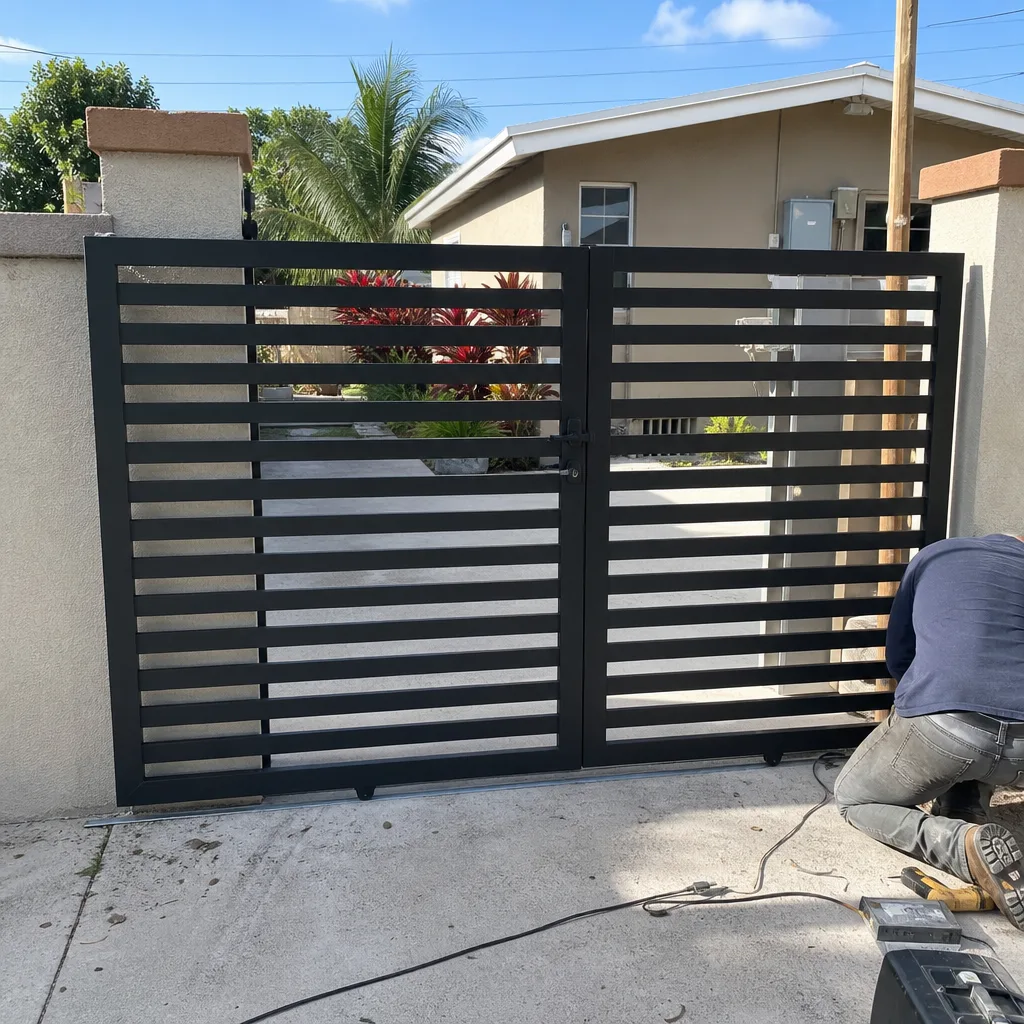
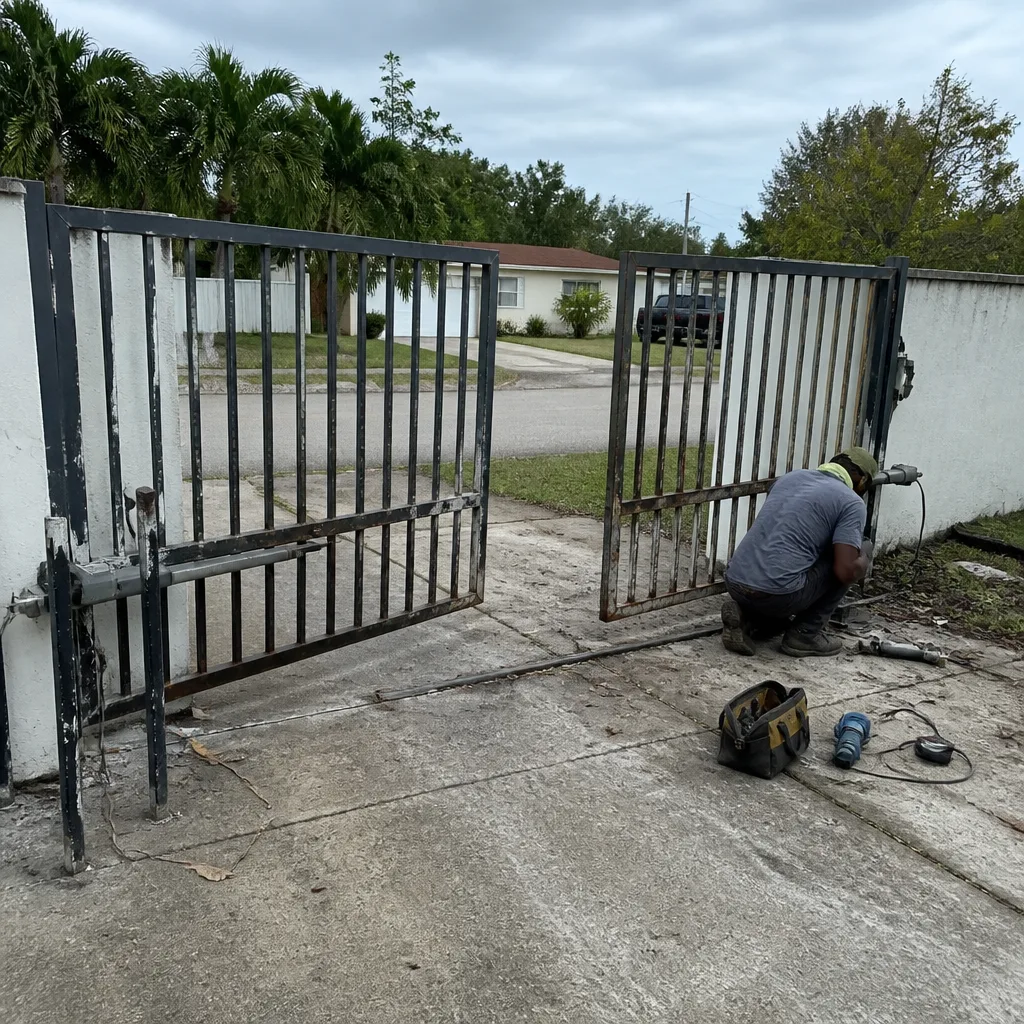
See the difference
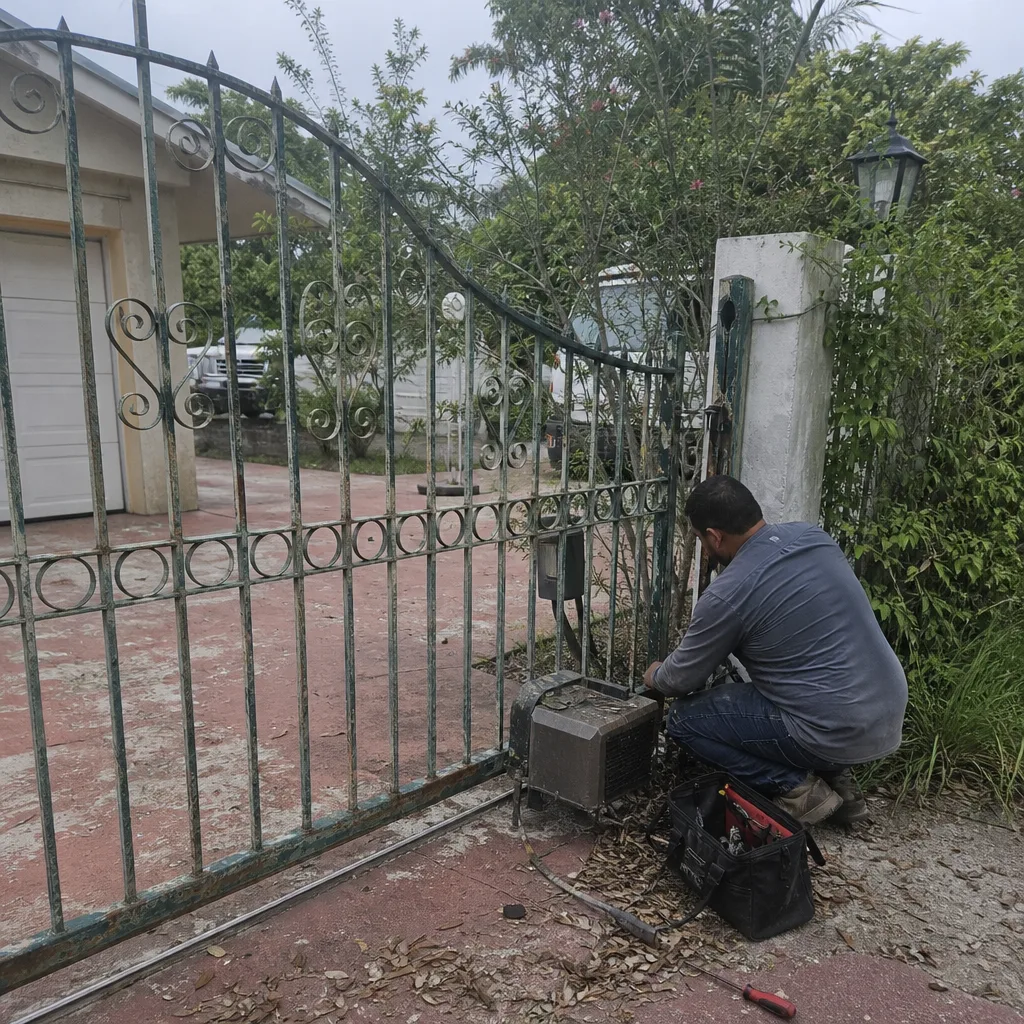 Before
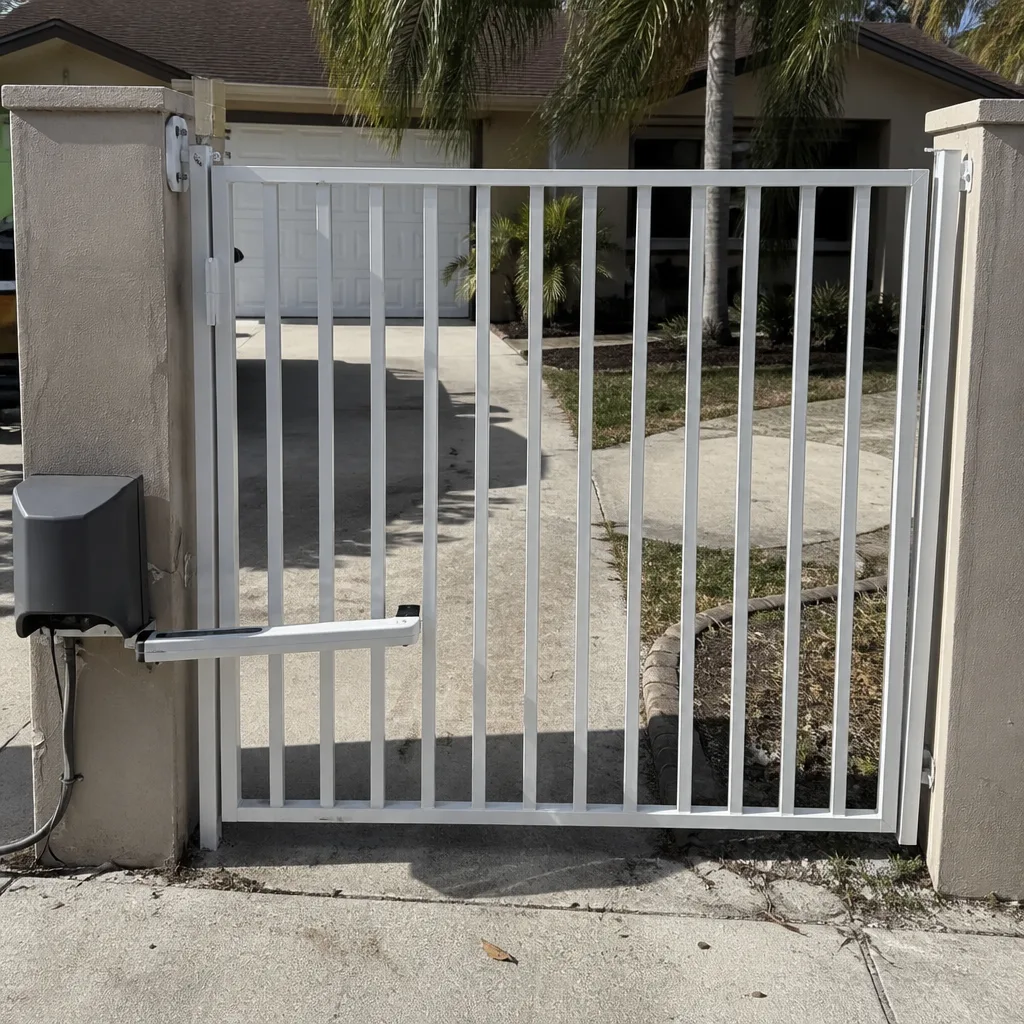 After
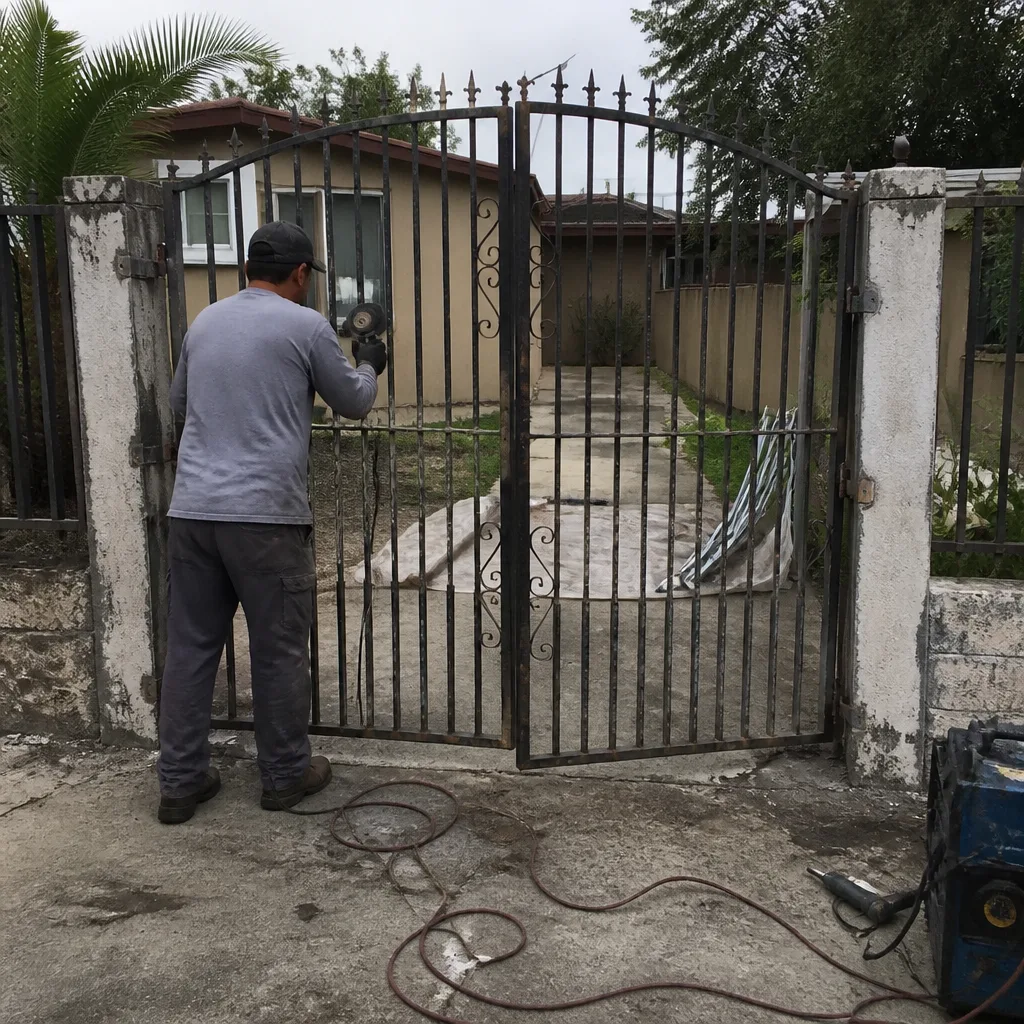 Before
 After
 Before
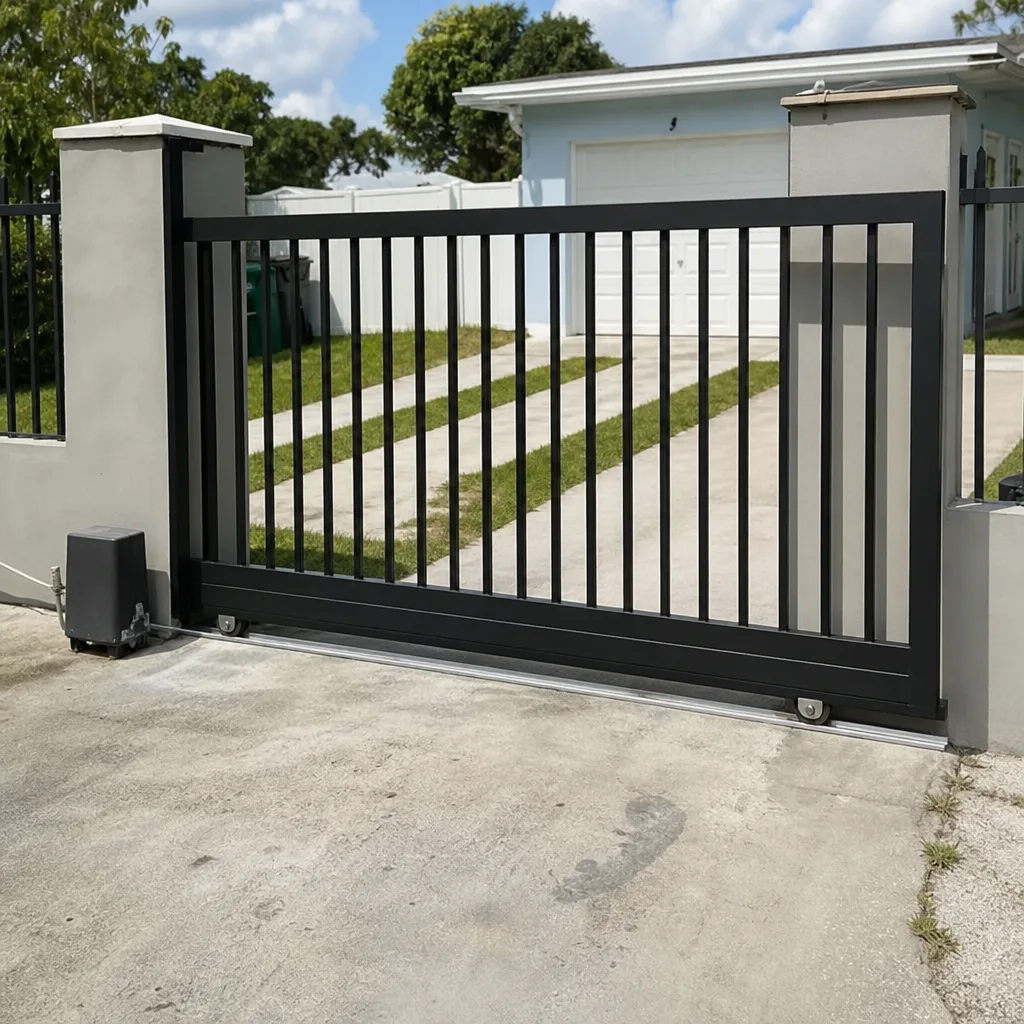 After