
Last updated October 30, 2026
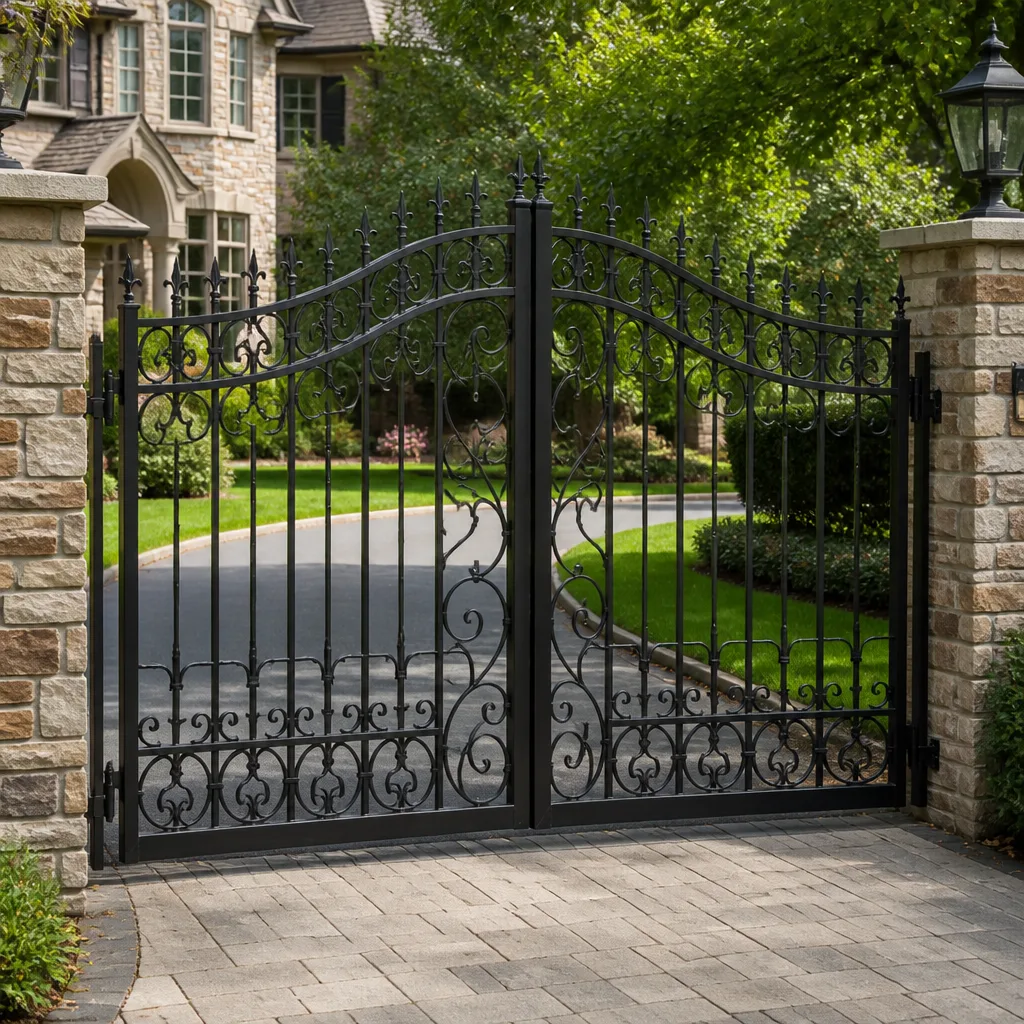 Wrought iron
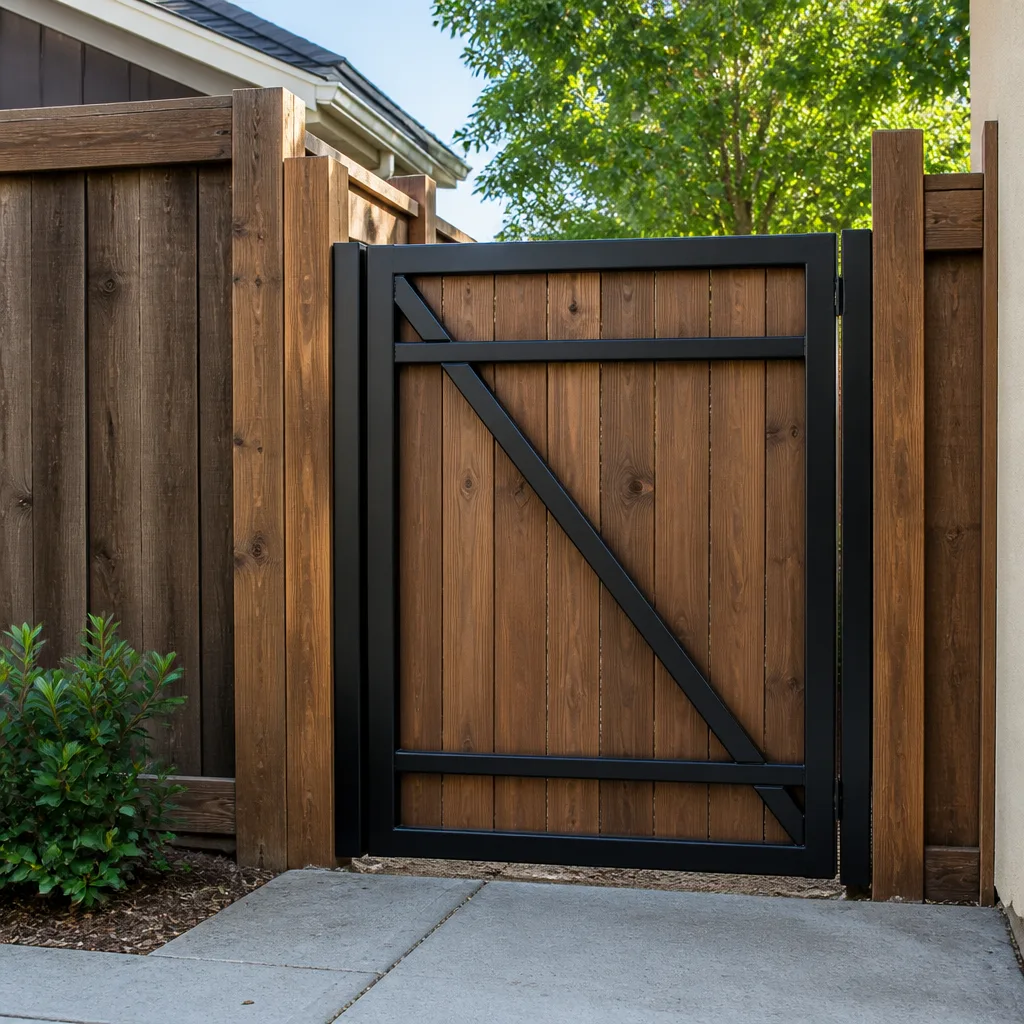 Wood & steel frame
 Farm & ranch
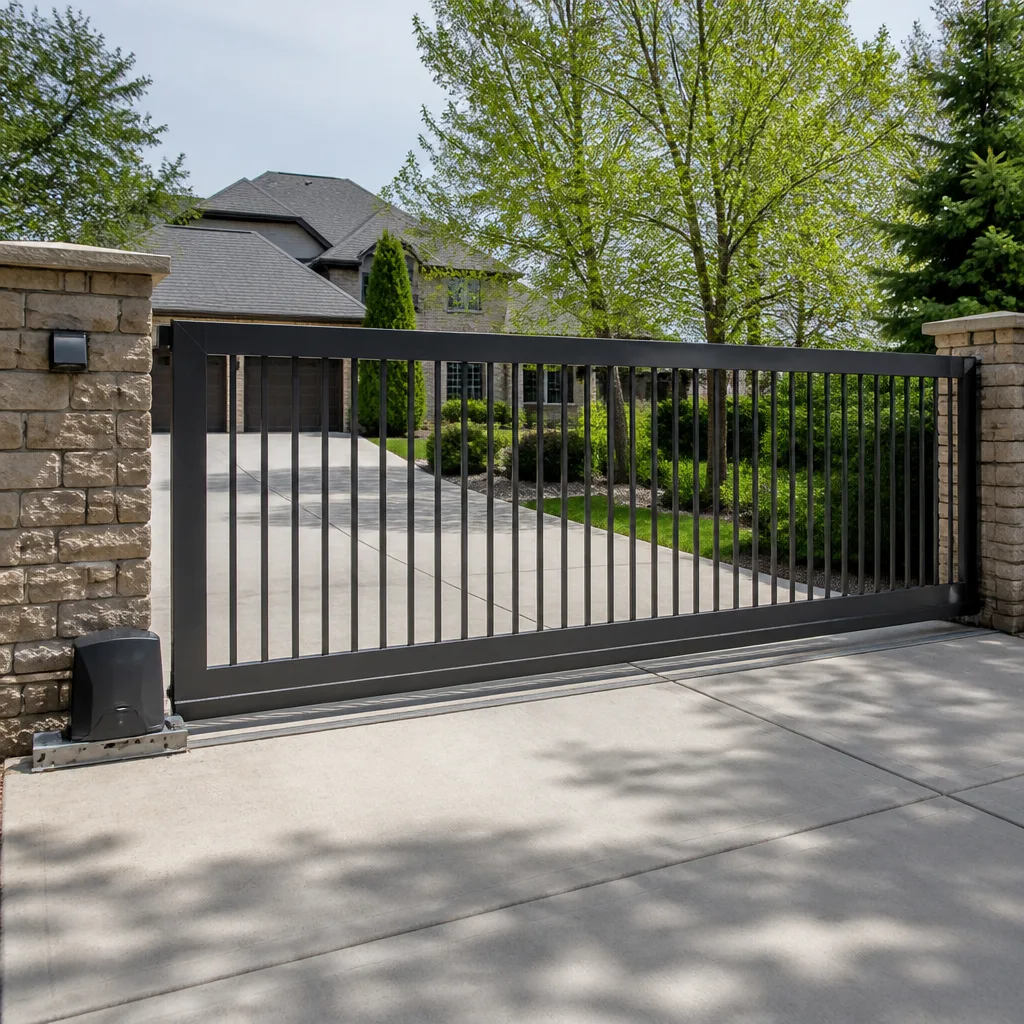 Sliding driveway gates
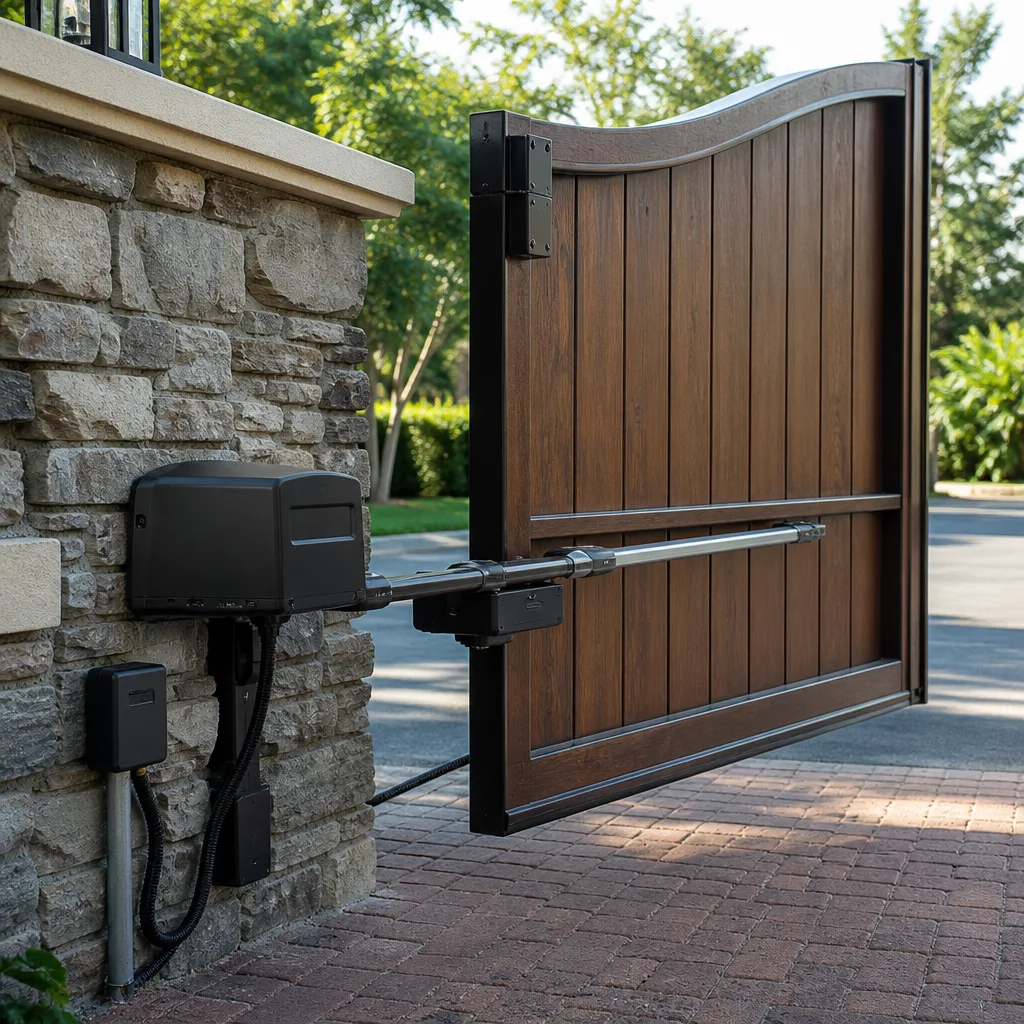 LiftMaster operators
Free on-site gate assessment - hinges, posts, and your LiftMaster or Nice gate operator checked before anything is quoted
The assessment is free and the quote is the invoice.
Get your free estimateGate Repair Permits, Codes & Inspections in FL: What You Need to Know
Replacing a gate operator with a higher-horsepower model is something thousands of Florida homeowners do without a second thought. They unbolt the old unit, mount the new one, wire it up, and consider the job done. Then they list the house for sale. That’s when the trouble starts. Under Florida Building Code and Miami-Dade County amendments, that upgrade legally qualifies as an alteration, not a repair. And alterations require permits. This guide draws the precise line between maintenance, repair, and alteration so you don’t unknowingly build liability into your property in Miami Gardens, and you can explore our Gate Repair Warning Signs: A Miami Gardens Homeowner’s Reference Guide for related issues.
Styles & brands we work with
Quick Answer
Most gate repairs in Florida do not require a permit. Replacing a hinge, adjusting a limit switch, or swapping a control board on the same operator is considered maintenance. But replacing the operator itself with a different model, changing horsepower, relocating the gate, or adding new access wiring typically triggers a permit requirement under Florida Building Code Section 1008 and local Miami-Dade amendments. When in doubt, the municipality’s building department makes the final call, not the contractor.
Table of Contents
- The Maintenance vs. Repair vs. Alteration Line Florida Actually Draws
- Florida Building Code Section 1008: What It Requires for Automated Gates
- UL 325 Compliance and Why It Matters During a Post-Repair Inspection
- How Miami-Dade County Code Treats Gate Work Differently
- Low-Voltage Permits for Access Control Wiring: When a Licensed Contractor Must Be on Record
- HOA Architectural Approval vs. Municipal Permit: Why You Can Need Both
- Unpermitted Gate Installations and Homeowner’s Insurance Claims
- Common Mistakes to Avoid
- When to Call a Professional
- Frequently Asked Questions
- The Bottom Line
The Maintenance vs. Repair vs. Alteration Line Florida Actually Draws
Florida code does not define gate work as a single category. It splits into three distinct buckets, and each one has different permit obligations. Getting this wrong is where homeowners create problems for themselves. Here is the line, drawn as clearly as the Florida Building Code allows.
Maintenance means keeping the existing gate and operator functioning as originally installed and approved. No permit. Examples include lubricating hinges and rollers, tightening bolts, adjusting the close-force setting on an existing LiftMaster or FAAC operator, replacing a worn gate wheel of the same size and type, and cleaning photo-eye sensors. Maintenance preserves the system as it was.
Repair means replacing a failed component with a like-for-like part. No permit in most cases. Replacing a burned-out Mighty Mule control board with the identical model, swapping a broken hinge for the same gauge and configuration, or installing a new loop detector of the same specification all fall here. The key phrase is “like for like.” The system does not change in capacity, voltage, or function.
Alteration means changing the system. This is where permits enter the conversation. Under Miami-Dade County code, an alteration includes any change to the operator’s horsepower or voltage, relocating the gate or operator, changing the gate from manual to automatic operation, adding a new vehicular access point, or installing access control wiring that did not previously exist. Swapping a 1/2-hp operator for a 1-hp unit to handle a heavier gate? That is an alteration. Adding a keypad where there was none? Alteration. A permit is required.
In Miami Gardens, we see this same confusion at least once a month. A homeowner calls about a gate that failed an insurance inspection or a title search turned up an unpermitted operator replacement from six years ago. The original repair seemed trivial at the time. The paperwork problem it created was anything but.
Florida Building Code Section 1008: What It Requires for Automated Gates
Florida Building Code Section 1008 governs gates, turnstiles, and other controlled egress points. For automated vehicular gates in residential and commercial settings, it establishes the baseline safety and construction requirements that municipalities enforce. If your gate serves a community entrance, a commercial property, or a shared access point, this section is not optional.
Section 1008 requires, in relevant part:
- Entrapment protection: Automated gates must comply with UL 325 entrapment protection requirements. This includes monitored photo-eyes at the gate edge, contact edges or non-contact sensors on the moving panel, and a pressure-sensing reversing mechanism on the operator.
- Maximum gate speed and force: Swing gates must not exceed a travel speed that creates a crushing hazard, and operators must reverse on contact with a certain force threshold. These values are defined in UL 325 and incorporated by reference into Florida code.
- Clear opening width and egress: Pedestrian egress paths must remain unobstructed. A vehicular gate cannot block the only pedestrian exit from a property without a separate pedestrian gate or approved bypass.
- Warning signage: Automated gates require permanent warning signs on both sides of the gate, stating the entrapment hazard and instructing users to keep clear of the gate’s path of travel.
- Emergency access: Fire departments must be able to access the property. Many Miami-Dade municipalities require a Knox key switch or equivalent emergency access device on automated gates serving multi-family or commercial properties.
During a post-repair inspection, the inspector checks these items before signing off. The inspection is not just a formality. A gate that lacks functioning photo-eyes, has a missing warning sign, or was wired without a proper disconnect fails inspection. In Miami Gardens, where many properties sit on zero-lot-line configurations, gate placement relative to the property line is also reviewed for setback compliance under the local zoning chapter.
For residential single-family gates on private property, enforcement is lighter. The state does not send inspectors door to door looking at driveway gates. But the code applies the moment a permit is pulled, an insurance claim is filed, or a sale is under contract. That is when the gap between what works and what is code becomes a problem.
UL 325 Compliance and Why It Matters During a Post-Repair Inspection
UL 325 is the national safety standard for automated gate operators. Every major operator brand sold in the U.S., including LiftMaster, FAAC, BFT, and Mighty Mule, designs its residential and commercial units to this standard. The standard covers entrapment protection, operator classification, and required external sensors. Florida Building Code incorporates UL 325 by reference, which means a gate that does not meet UL 325 automatically fails the code requirement too.
What UL 325 means in practical terms for a gate owner:
- Class I, II, III, and IV operators: The classification determines which safety devices are mandatory. A Class I residential swing gate operator has different requirements than a Class III commercial slide gate operator. Replacing a Class I operator with a Class III unit changes the safety device requirements.
- Monitored vs. non-monitored entrapment protection: Monitored devices report wiring failures to the operator control board, which then prevents operation. Non-monitored devices do not. UL 325 requires monitored protection for most installer-configured systems. Many older installations in Miami Gardens use non-monitored photo-eyes that would not pass inspection today.
- External entrapment protection devices: Photo-eyes, edge sensors, and contact strips must be installed at all entrapment zones: the gate’s leading edge, the trailing edge, and any pinch points between the gate panel and the post.
- Operator reset requirements: After an entrapment event, the operator must not automatically reset. A manual reset is required. Inspectors check this function during the post-repair inspection.
When a permit is pulled for an alteration, the inspection includes UL 325 device checks. The inspector will cycle the gate, block the photo-eye, test the reversing force, and verify that warning signage is present. A gate that works fine day-to-day but lacks a functioning reversing edge or monitored photo-eye fails inspection. In our experience installing and repairing operators across all nine major brands, older MyQ-enabled LiftMaster units and entry-level Mighty Mule DC operators are the most common culprits for non-compliant sensor wiring.
How Miami-Dade County Code Treats Gate Work Differently
Miami-Dade County operates under stricter amendments than the rest of Florida. The county maintains its own building code overlay on top of the Florida Building Code, and several provisions affect gate work specifically. If you live in Miami Gardens, you answer to both the state code and the Miami-Dade amendments. One of the most impactful differences is the county’s High Velocity Hurricane Zone requirements in Chapter 11, which affect how gate posts are anchored and how large swing gate panels are engineered.
Concrete examples of the Miami-Dade distinction:
- Repair vs. alteration threshold: Miami-Dade treats operator replacement with a different model as an alteration requiring a permit, even when horsepower is identical. The county’s interpretation is stricter than many other Florida jurisdictions, where a like-for-like horsepower swap often flies as a repair.
- Wind-load anchoring: Gates over 6 feet in height or with a panel area over a certain threshold require engineering calculations for the post footings. A homeowner who decides to hang a heavier, taller wrought-iron panel on posts originally poured for a 4-foot aluminum gate is in alteration territory, and the county will ask for the calculations.
- Electrical disconnects: Miami-Dade electrical code requires a dedicated, lockable disconnect within sight of the gate operator. Older installations that wire the operator directly to a branch circuit without a disconnect do not pass inspection.
- Low-voltage work: Access control wiring, keypads, and intercoms fall under Miami-Dade’s low-voltage permit requirements in many municipalities. We cover this in detail below.
For a homeowner in Miami Gardens planning a gate operator replacement, the practical question is simple: is this the same operator, or a different one? Same exact model numbers and the work is repair. Different model, different voltage, or different horsepower, and you should expect to pull a permit. The inspector will care less about the operator brand and more about the installation details: sensor wiring, disconnect location, post anchorage, and the gate’s force settings.
Low-Voltage Permits for Access Control Wiring: When a Licensed Contractor Must Be on Record
Access control wiring is the part most homeowners never think about. A keypad, card reader, telephone entry system, or intercom all require low-voltage wiring from the house or a control cabinet to the operator. Under Florida law, low-voltage work falls under the electrical contracting license scope. When that wiring is part of a new installation or an alteration, a licensed low-voltage contractor must be on record in most Miami-Dade municipalities. This is a separate requirement from the building permit for the gate structure itself.
What requires a low-voltage permit:
- Running new low-voltage cable from the house to a gate operator or keypad. This applies to Cat5/Cat6 for IP-based access systems and to 18-gauge multi-conductor cable for analog keypads.
- Adding or relocating an access point: a new keypad pedestal, a card reader bollard, or an intercom station at the gate.
- Installing a telephone entry system, vehicle loop detector, or license plate recognition camera that integrates with the gate operator.
- Converting a manual gate to automatic operation, where all of the control wiring is new work.
What does not require a low-voltage permit: replacing an existing keypad with the exact same model and wiring harness where no new cable is run, swapping a battery in a wireless intercom, or reprogramming an existing access system.
In Miami Gardens, the low-voltage permit is often the forgotten step. A contractor pulls the building permit for the gate alteration, completes the work, and the electrical inspector arrives to find new access wiring with no low-voltage permit on file. The inspection fails, the homeowner pays a re-inspection fee, and the project stalls for weeks. When we handle gate installations that include access control, we coordinate both permits up front. It saves the homeowner a re-inspection fee and a month of back-and-forth with the building department.
HOA Architectural Approval vs. Municipal Permit: Why You Can Need Both
Many Miami Gardens properties sit in communities with a homeowners association or a condominium association. Those associations have architectural review committees that govern what you can install, not just whether it meets code. An HOA approval and a municipal permit are separate processes, with separate timelines and separate failure points. You can hold one without the other, and neither substitutes for the other.
An HOA architectural approval typically governs:
- The appearance and material of the gate panel: wood, aluminum, wrought iron, composite.
- The height of the gate and any attached fencing or screening.
- The finish color and whether it matches the community’s palette.
- The location of the operator, keypad, and any concrete pads relative to the sidewalk and street.
- Whether a solid gate is allowed at all. Some communities prohibit opacity above a certain percentage.
The municipal permit governs code compliance: setbacks, height limits under zoning, electrical work, anchoring, and UL 325 safety devices. An HOA cannot waive a code requirement, and the building department does not care what the architectural committee approved.
Timelines interact in a specific order. The HOA approval should come first, because the architectural committee may reject the design you had planned to submit with the permit application. A homeowner who pulls a permit first and then has the HOA reject the design has paid for a permit on a gate they cannot build. In Miami Gardens, where several communities have 30-to-60-day architectural review windows, starting the HOA process early matters more than most homeowners expect.
Unpermitted Gate Installations and Homeowner’s Insurance Claims
Here is where the permit question stops being academic. If someone is injured by a gate on your property, the homeowner’s insurance claim process will include a search for permits. An unpermitted operator installation or alteration becomes an immediate problem. The insurer’s adjuster will ask for the permit history on the gate. If none exists, the claim gets complicated in a hurry.
What an unpermitted gate installation does to an insurance claim:
- Coverage denial for the incident: The insurer may deny the liability portion of the claim, arguing that the homeowner knowingly operated an unpermitted installation in violation of county code.
- Reduced settlement value: Even if the claim is not denied outright, the lack of a permit gives the insurer leverage to reduce the payout. The homeowner shares fault for the unsafe condition.
- Policy cancellation or non-renewal: Some carriers will cancel the policy after a claim involving unpermitted work, or decline to renew at the next cycle.
- Future insurability problems: The claim and the code violation get recorded. The next insurer sees a property with a history of unpermitted work and prices the risk accordingly.
- Injury lawsuits become harder to defend: In a negligence suit, the plaintiff’s attorney will use the missing permit as evidence that the homeowner disregarded safety requirements. It is a gift to the other side.
The injury does not even have to be a stranger’s. A delivery driver hit by a swinging gate, a child’s hand caught in a sliding gate, a neighbor’s car damaged when an operator failed. Each one starts the same insurance conversation. The permit is the first document requested. Our advice to homeowners in Miami Gardens is blunt: if you are not sure whether a past gate repair was permitted, find out before a claim forces the question. For current and future work, Gate Repair in Miami Gardens requires knowing what the county will ask for before the first bolt comes off.
Common Mistakes to Avoid
- Assuming any replacement is a repair. Replacing a Mighty Mule operator with a higher-torque FAAC unit is an alteration, not a repair. Putting a different model on the same post does not change that. The horsepower difference is the legal trigger.
- Skipping the HOA review. In Miami Gardens communities with architectural committees, installing a gate without approval can result in a removal order. The HOA cannot waive code, but they can make your life expensive if they were not consulted.
- Treating access control wiring as “just low-voltage, no big deal.” New wiring for a keypad or phone entry system is a low-voltage permit item in Miami-Dade. Doing it without a licensed contractor on record fails inspection.
- Leaving non-monitored photo-eyes in place. Many older installations in Miami Gardens use non-monitored sensors that no longer pass UL 325 inspection. A post-alteration inspection will fail on this point every time.
- Ignoring the disconnect requirement. An operator wired directly to a branch circuit with no lockable disconnect in sight of the gate is an instant inspection failure under Miami-Dade electrical code.
- Underestimating wind-load anchoring. Hanging a taller or heavier gate panel on posts not engineered for it is a structural alteration. The county will want the calculations, and the original footings rarely support an upsized panel.
- Believing the contractor’s word over the permit record. Contractors say “you don’t need a permit for this” all the time. The building department, the insurance adjuster, and the title company are the ones who decide. If no permit was pulled, the work does not exist on paper.
When to Call a Professional
Call a professional whenever the repair stops being maintenance. If you are replacing an operator with a different model, changing horsepower, adding access control, relocating the gate, or converting a manual gate to automation, the work now involves permits, code compliance, and inspection coordination. That is a different job than swapping a hinge.
Specific scenarios that warrant a call: the gate is heavy enough that the existing operator is undersized and you need an upgrade. The control board failed and you are considering a different brand. You want a keypad or intercom where none existed. The gate failed an insurance or title inspection for missing permits. Any of these means the job has moved past DIY. Miami Gardens Gate Repair home offers free estimates in Miami Gardens – call (855) 382-0732 to have someone who knows the code look at what you have.
Frequently Asked Questions
Replacing a gate operator with the exact same model is considered a repair and does not require a permit in most Florida jurisdictions. Replacing it with a different model, a different horsepower, or a different voltage is an alteration and does require a permit under Florida Building Code and Miami-Dade County amendments. When our technicians note the difference in models, we flag it before any work begins so the homeowner knows the permit picture up front.
Gate permit fees in Miami Gardens vary based on the scope and valuation of the work. A simple operator alteration is typically in the low hundreds of dollars, while a full new installation with electrical and low-voltage components will run higher. The building department calculates fees on a sliding scale tied to the project valuation, so the specific number depends on your exact scope. Call (855) 382-0732 and we can walk you through what your specific job will need and what the cost picture looks like.
The inspector issues a correction notice listing the specific deficiencies, and those items must be fixed before a re-inspection is scheduled. Common failure points in Miami Gardens include missing monitored photo-eyes, no lockable disconnect, non-compliant warning signage, and undersized post anchoring for the gate panel. The re-inspection carries a fee, and the correction window is typically 30 days. Fixing these items the first time is almost always cheaper than a second visit from the inspector.
Yes. A municipal permit confirms code compliance. An HOA architectural approval confirms community standards compliance. They are separate requirements, and an HOA can require changes to the gate’s appearance, material, or design even when the building department has approved it. Gate Installation in Miami Gardens often starts with the HOA packet precisely because municipal approval does not protect you from architectural committee enforcement.
For the line-voltage circuit feeding the operator, a licensed electrical contractor is required in Miami-Dade County. For the low-voltage access control wiring, a licensed low-voltage contractor must be on record. The permit categories are distinct, and both may be required on the same job. Our work coordinates both so the inspections match what was actually installed.
Yes. An automated gate assembly, including the operator, the gate panel, and the supporting posts, is considered a structure and is subject to Florida Building Code Section 1008, local zoning setbacks, and Miami-Dade wind-load provisions. This classification is what triggers the permit requirement for alterations. A gate is not treated as mere landscaping or an appliance.
The Bottom Line
Most gate repairs in Florida need no permit. The danger is not the repair itself. It is the moment a repair crosses the line into an alteration without anyone noticing. A higher-horsepower operator, a relocated keypad, a taller panel on old posts. Each one is a legal event hiding inside a simple upgrade. The permit record becomes the first thing anyone looks at when the gate injures someone, when the house goes under contract, or when the insurance company starts asking questions.
Know the difference between maintenance, repair, and alteration. Know that Miami-Dade draws the line stricter than most of the state. Know that HOA approval and municipal permits are separate obligations. And when the job moves past maintenance, have someone on the phone who knows the code and the gate brands. If you are in Miami Gardens and your gate needs work that might cross the permit line, Electric Gate Repair in Miami Gardens is what we do every day.
Written by the team at Miami Gardens Gate Repair, serving Miami Gardens since 2012. Browse our more guides & resources for additional homeowner help.
See the difference
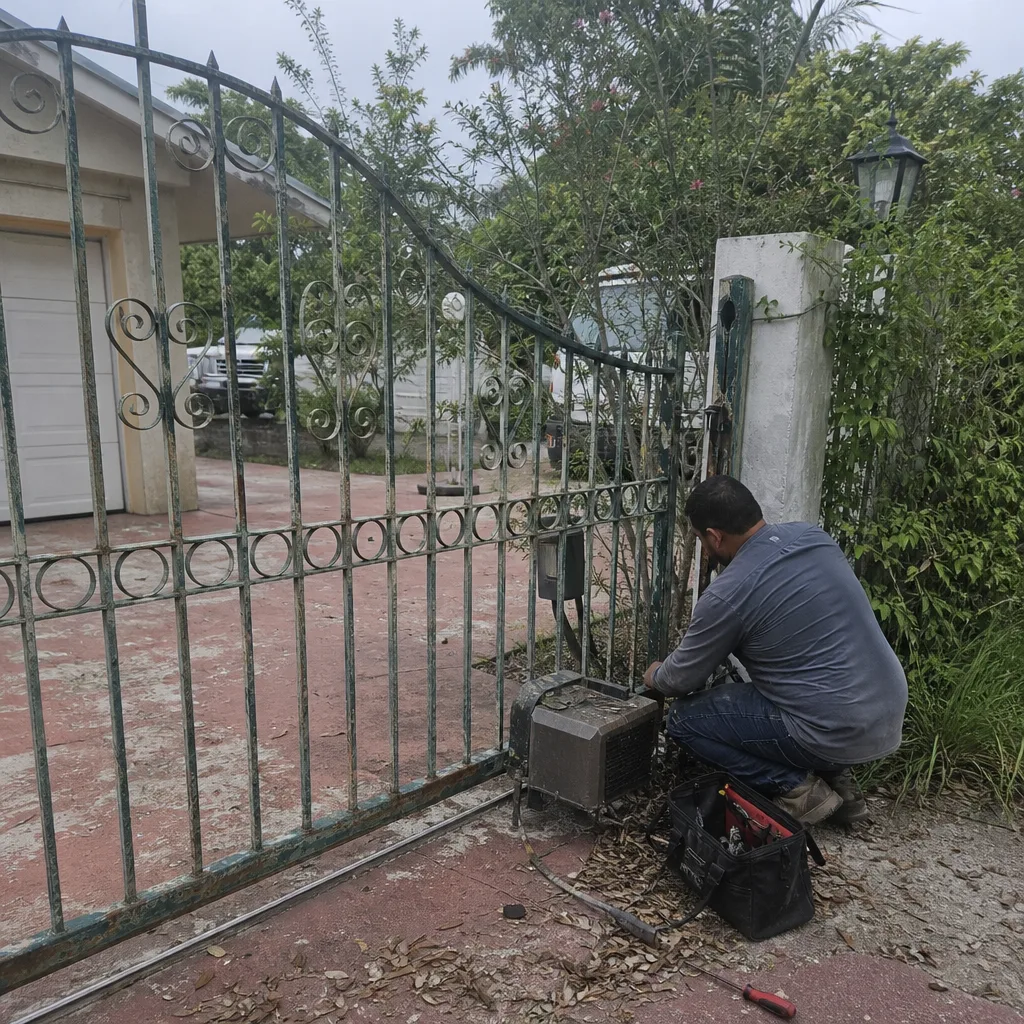 Before
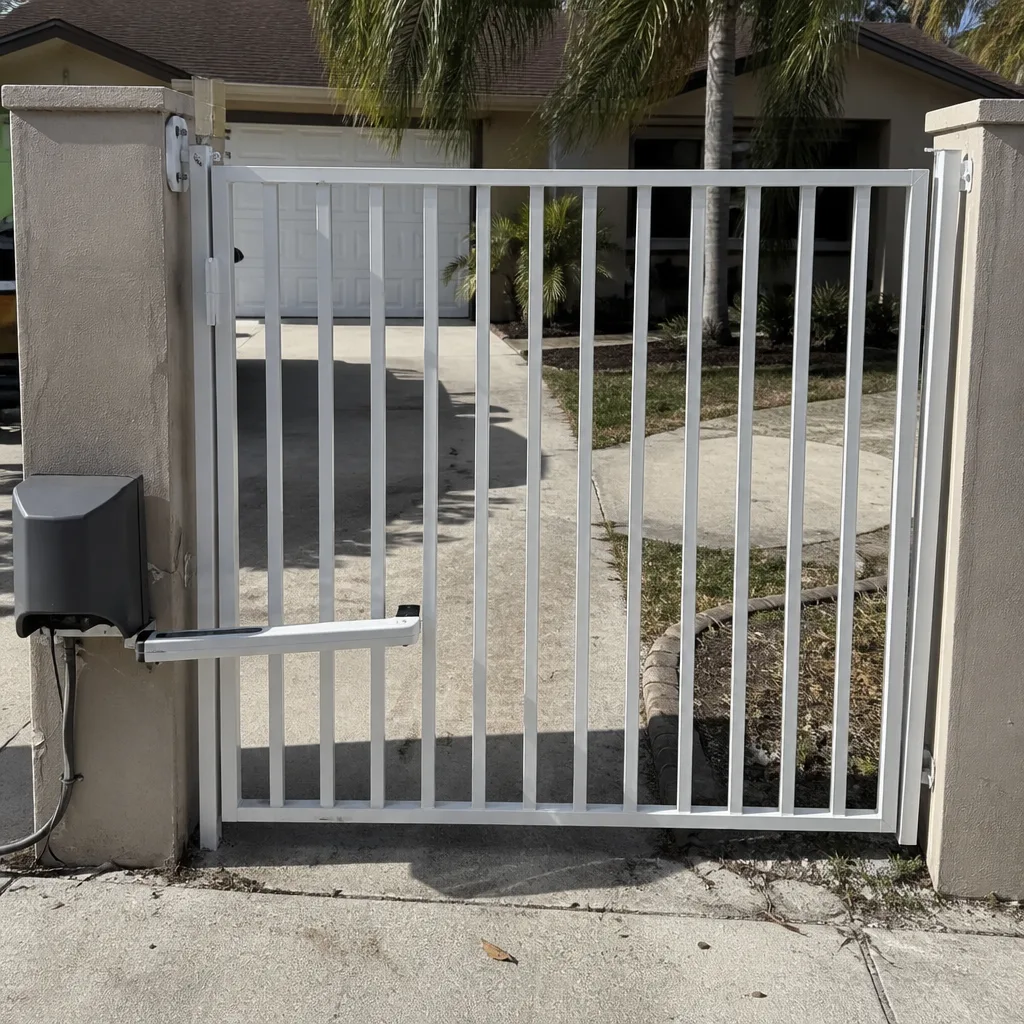 After
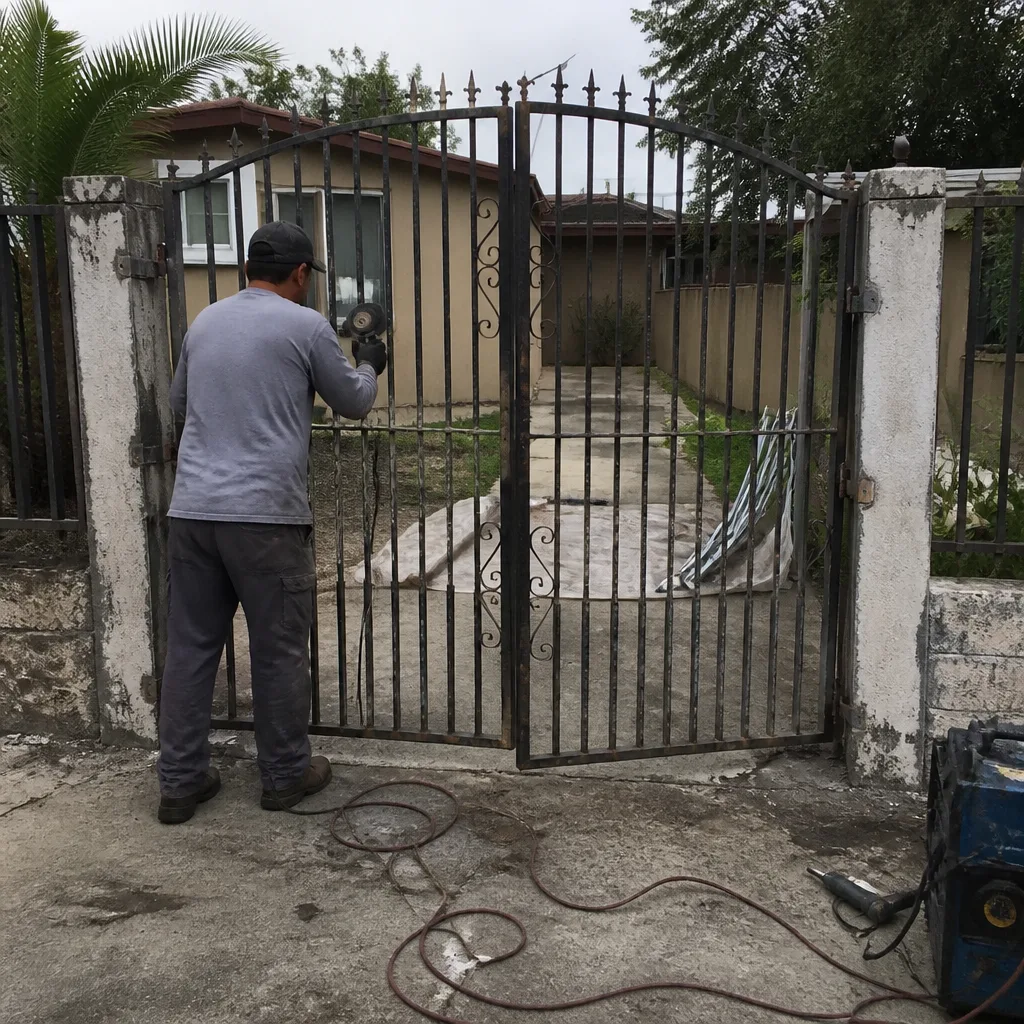 Before
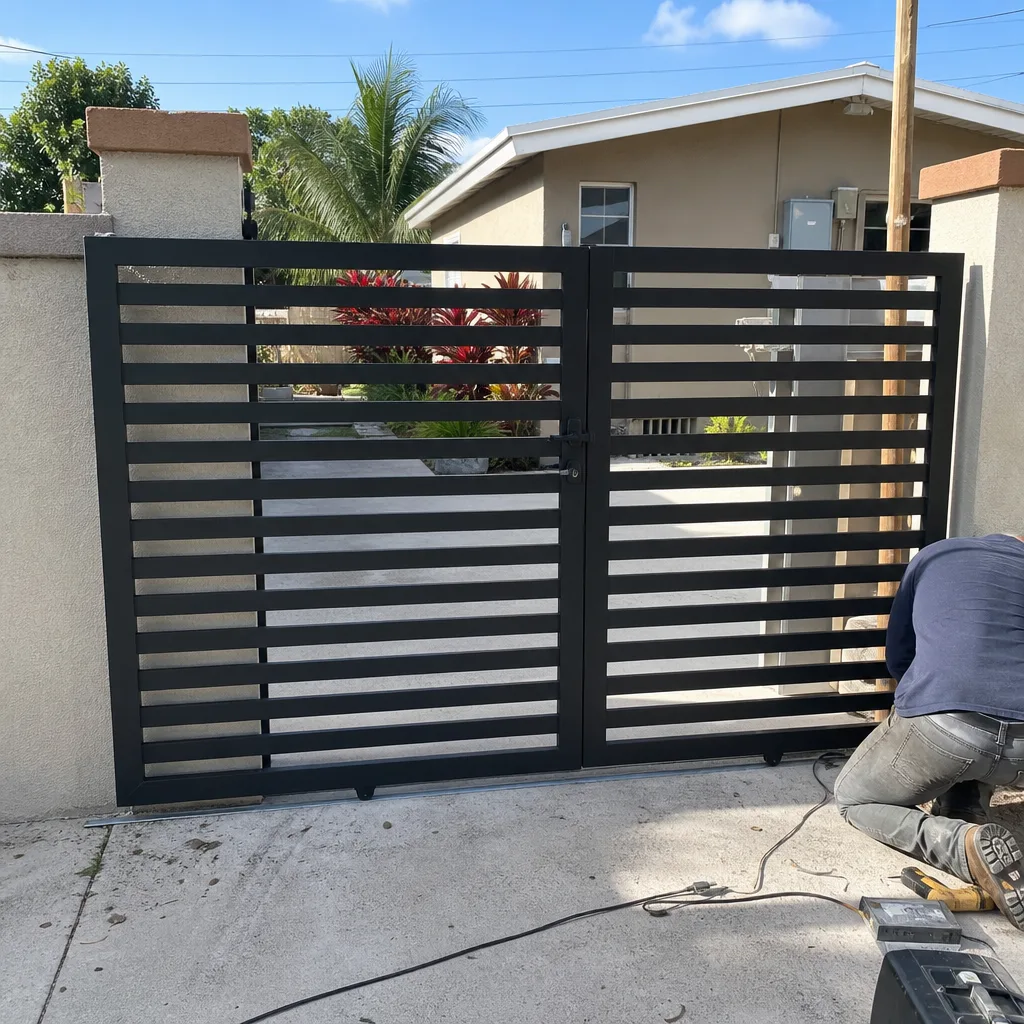 After
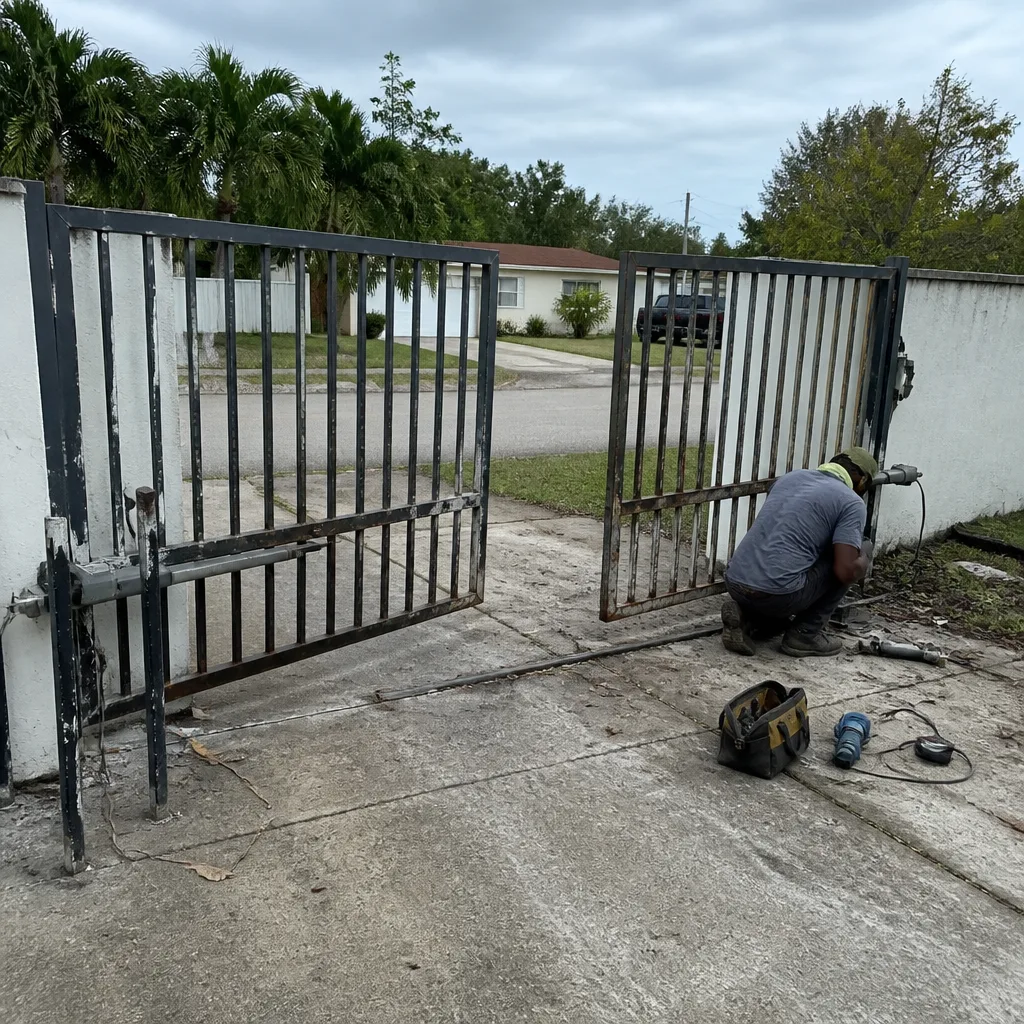 Before
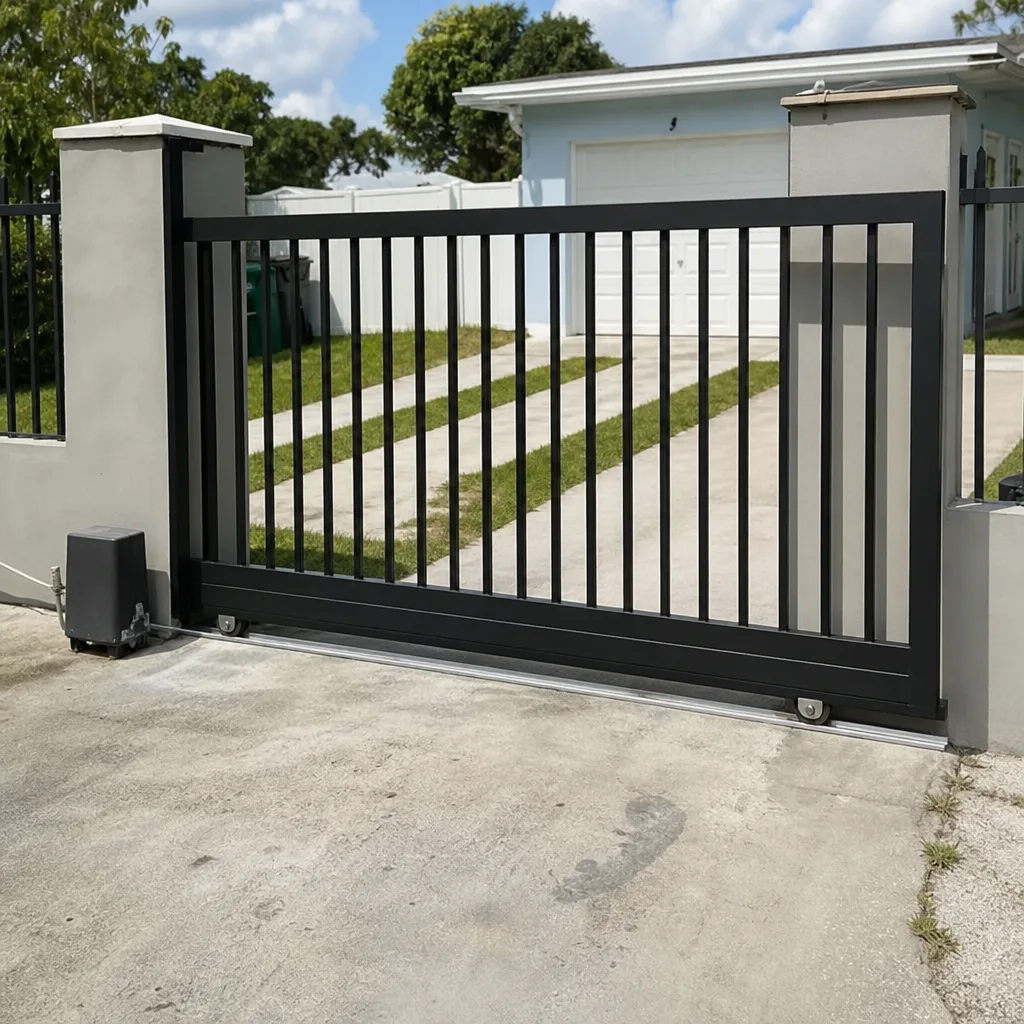 After